
Home of English Grammar

Grammar Guide
  • Home
  • Exercises
  • Matches
  • Rules
  • Tools
    • Grammar Checker
    • Very Replacer
    • Word Counter
  • Top Social Media Posts
  • Various Posts
  • Vocabulary
  • Writing Guides
  • Contact

What “in the wars” means, and where it comes from

August 19, 2026 - pdf

The origin of "in the wars"

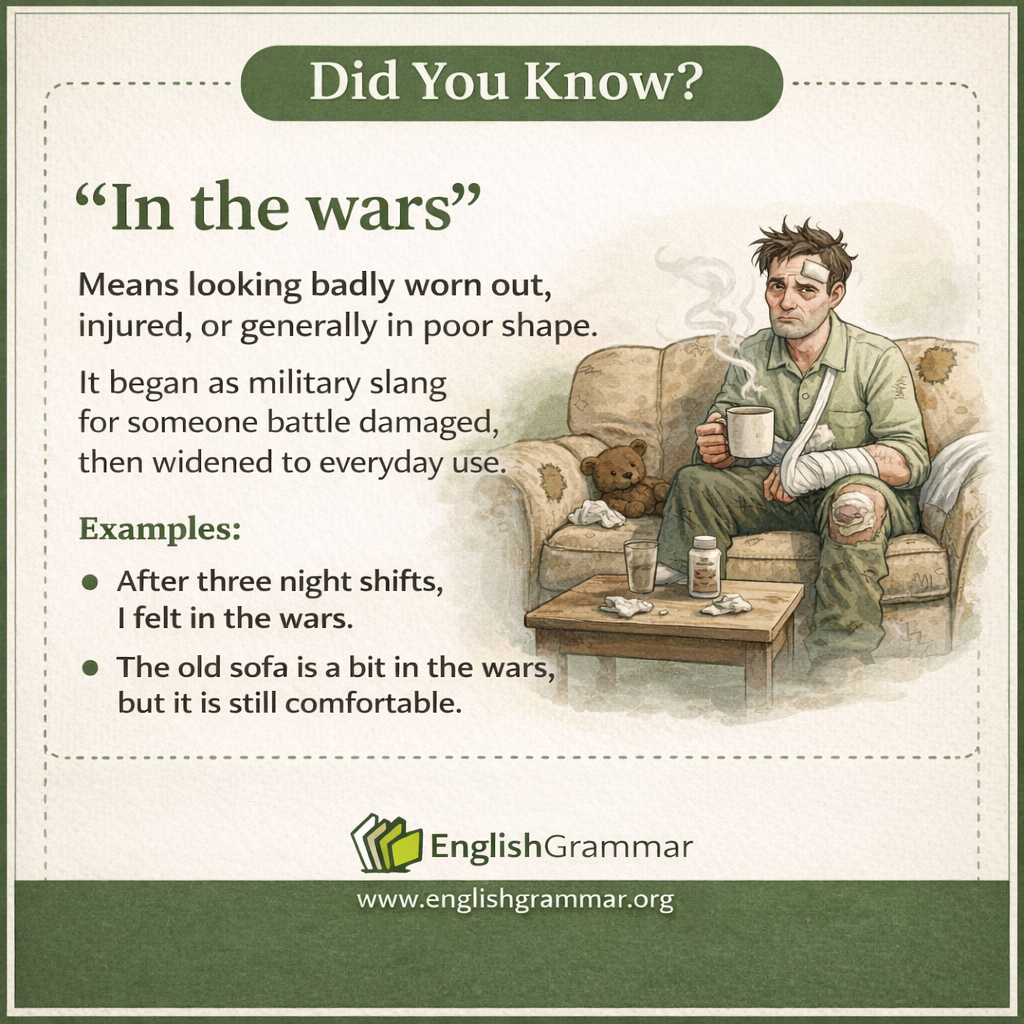
In the wars is a mainly British expression meaning battered, injured, exhausted, or in poor condition. It can describe a person or a thing.

The phrase appears to have grown from military slang. The idea is straightforward: someone who has been through wars is likely to be marked, hurt, or worn down by the experience. Over time, English speakers extended that image to everyday life, even when no actual fighting was involved.

Today, people use it for minor injuries, illness, tiredness, or anything that looks a bit beaten up.

  • After the marathon, I was really in the wars.
  • He came back from the dentist looking in the wars.
  • The car is a bit in the wars, but it still runs well.

This is usually an informal phrase. It often suggests that someone has had a rough time recently, rather than a serious medical emergency. For objects, it means worn, damaged, or shabby. That wide use is why the expression still feels vivid and useful in modern English.

  • Share
  • Post
  • Post
  • Reddit
  • Email
  • WhatsApp
NEW: Try Matches, our daily vocabulary challenge. Pick a topic and level and match words with definitions to boost your vocabulary.
2,485,429 
761,532 
Improve Your Grammar
  • Download 2026 Grammar Guide (PDF)
  • Free Weekly Exercises & Vocabulary
  • Join over 3 Million English Learners
We respect your privacy. Unsubscribe anytime.

Grammar Checker

GrammarCheck.net - Try online
Hint → Bookmark GrammarCheck for future use.

Latest Posts

  • What “in the wars” means, and where it comes from August 19, 2026
  • 100 Best Synonyms for “Respecting” August 19, 2026
  • 100 Best Synonyms for “Addressing” August 19, 2026
  • 100 Questions to Ask At a Design Review August 19, 2026
  • Turbid vs. turgid: what is the difference? August 19, 2026
  • 100 Best Synonyms for “Resonate” August 19, 2026
  • 100 Words Every Social Media Manager Should Know August 19, 2026

Copyright © 2026 · EnglishGrammar.org
Disclaimer · Pro · Privacy Policy · Refund Policy · Sitemap · Terms

Improve Your Grammar
  • Download 2026 Grammar Guide (PDF)
  • Free Weekly Exercises & Vocabulary
  • Join over 3 Million English Learners
We respect your privacy. Unsubscribe anytime.