
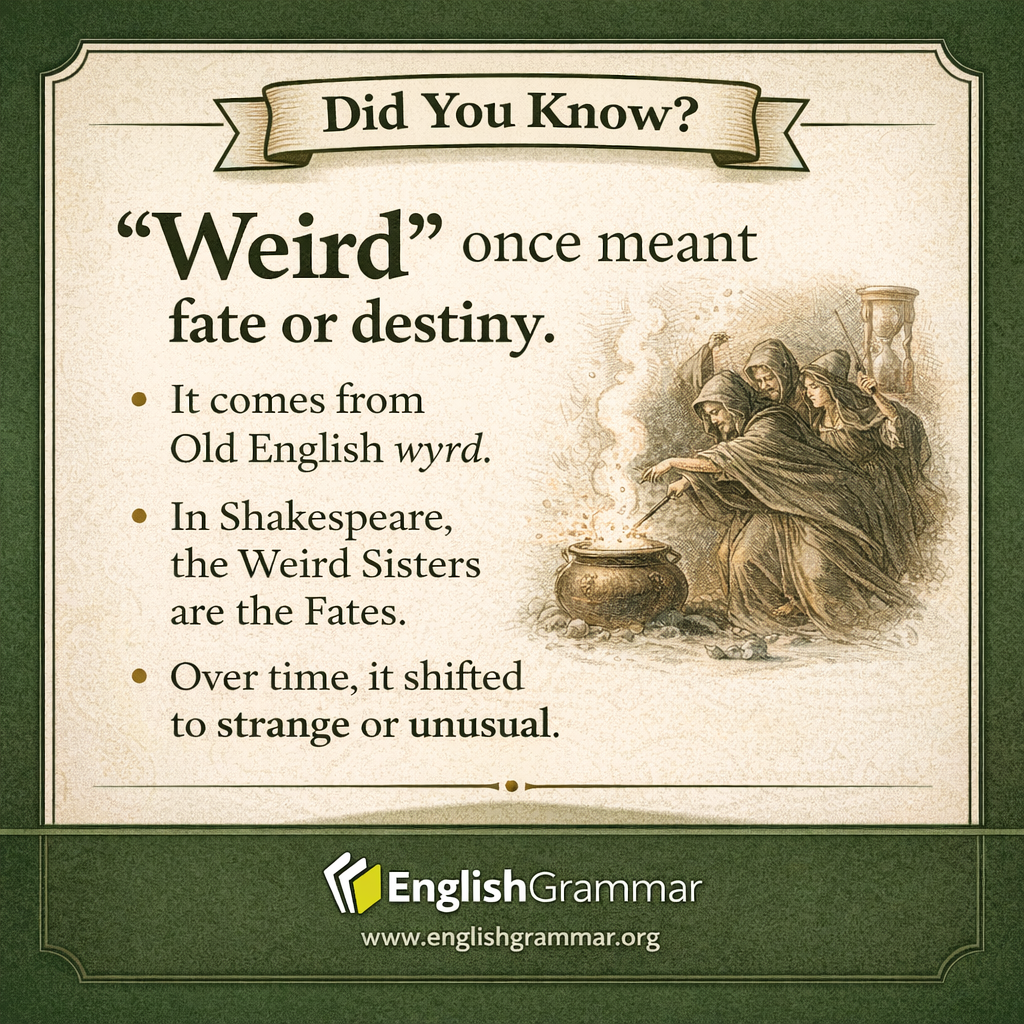
Weird did not originally mean odd or unusual. In older English, it meant fate or destiny. The word comes from Old English wyrd, which referred to the power or outcome that shaped a person’s life.
That older meaning appears clearly in Shakespeare. In Macbeth, the Weird Sisters are not simply strange women. The phrase connects them with fate, much like the classical Fates who foretell and shape human lives.
Over time, the meaning changed. English speakers gradually began using weird for something uncanny, then for something odd, and finally for the everyday sense of strange or unusual.
- Older sense: weird = fate or destiny
- Shakespeare: the Weird Sisters = sisters associated with fate
- Modern sense: That movie was weird = strange or unusual
This is a good example of how word meanings can shift a lot over time. A familiar modern word can preserve an older meaning in literature, even after everyday usage has moved on.