
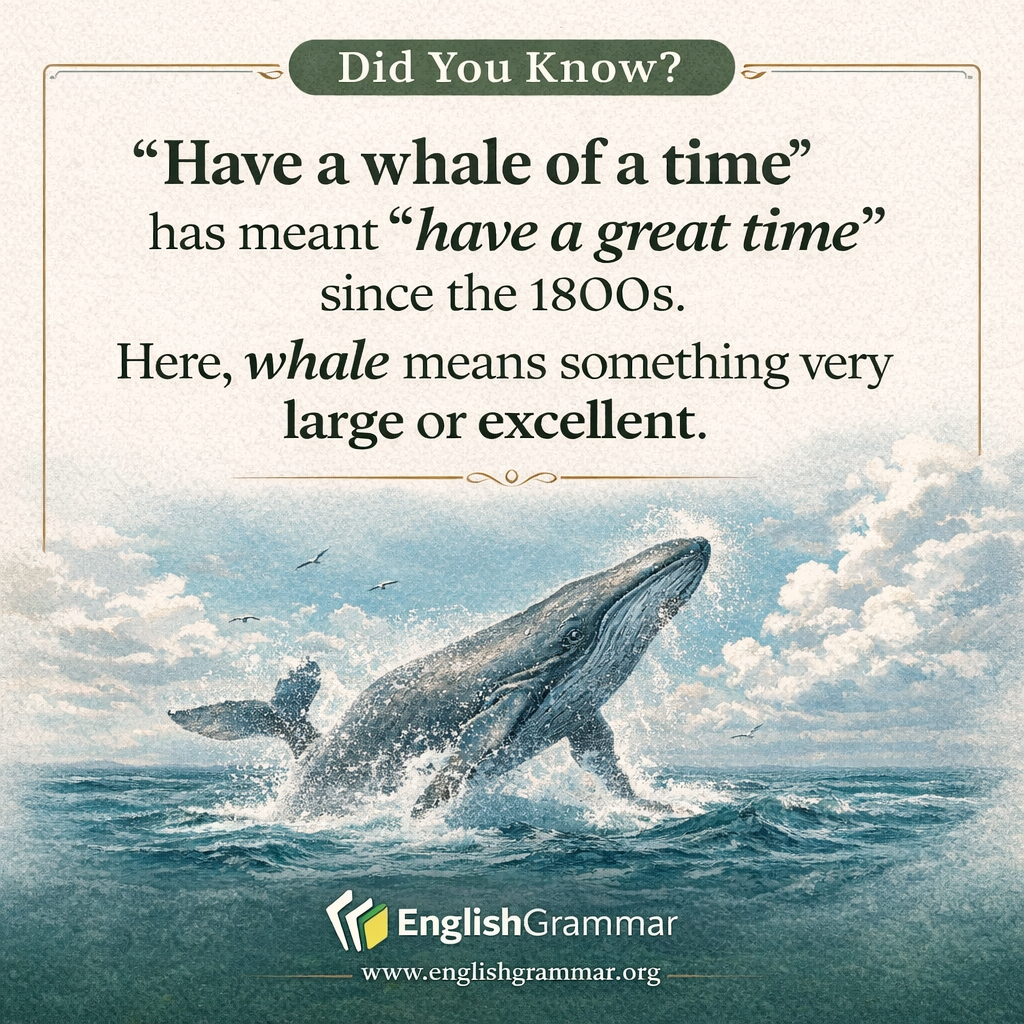
“Have a whale of a time” sounds like it should be about the animal, but the key idea is older figurative use. In the 1800s, whale could suggest something very large, impressive, or excellent. That sense helped shape the expression into one that means having a very good time.
This follows a pattern English uses often, where a vivid word grows into a general intensifier. In this idiom, the point is not literal size. It is the feeling of abundance or greatness.
- Correct use: “We had a whale of a time at the reunion.”
- Contrast: “We saw a whale during the boat trip” uses the animal literally, not the idiom.
So when someone says they had a whale of a time, they simply mean they enjoyed themselves a lot. The phrase survives because it is colorful, memorable, and easy to understand from context, even if most speakers never think about the older sense of whale.