
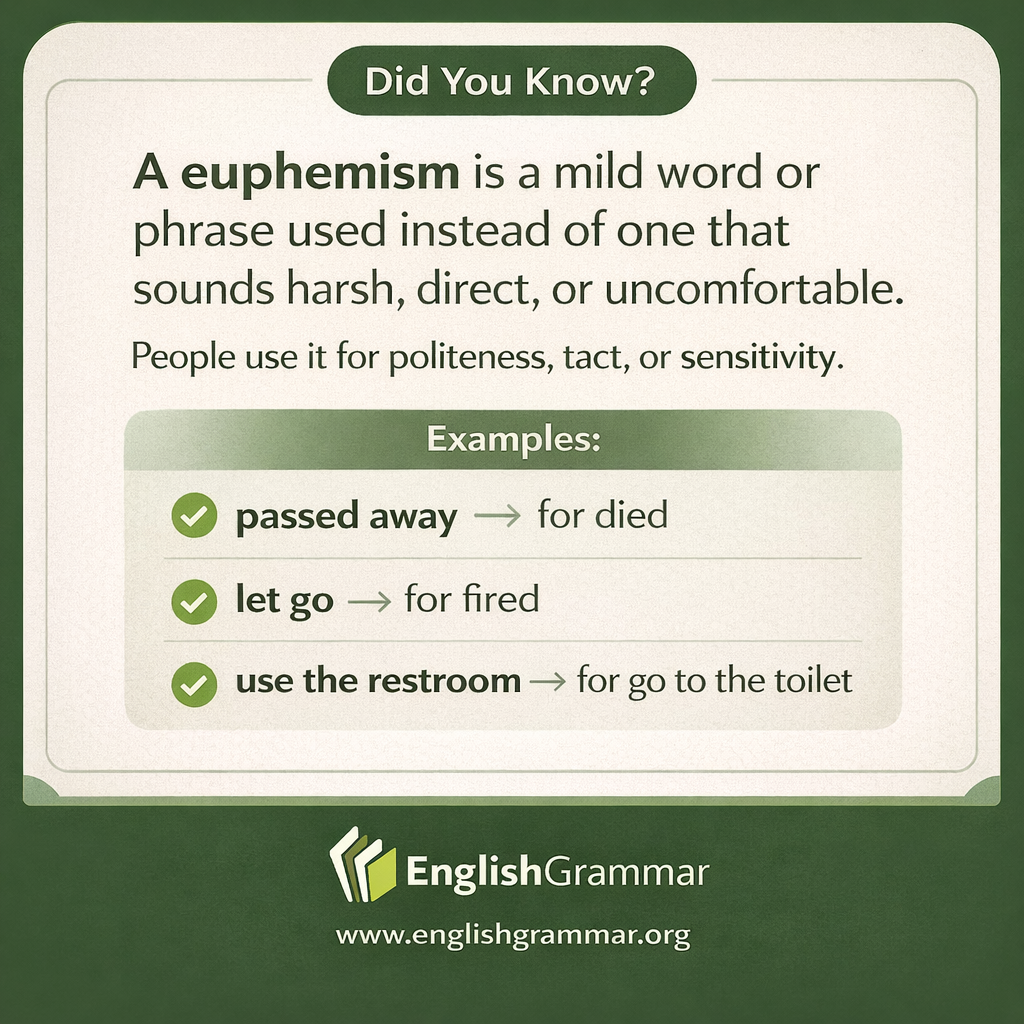
A euphemism is a mild or indirect word or phrase used in place of one that may sound harsh, blunt, or uncomfortable. People often use euphemisms to be polite, to show sensitivity, or to talk about difficult topics more gently.
For example, someone might say passed away instead of died. An employer might say let go instead of fired. A person might say use the restroom instead of go to the toilet. In each case, the meaning is similar, but the tone feels softer.
Euphemisms are common in everyday English because they help speakers manage social situations carefully. They often appear when talking about:
- Death: passed away
- Job loss: let go
- Body functions: use the restroom
- Age: senior instead of a more blunt label
It is also useful to remember that euphemisms can hide meaning. Sometimes they sound kinder, but sometimes they make language less clear. Good writers and speakers choose them carefully, depending on tone, audience, and purpose.
