
Home of English Grammar

Grammar Guide
  • Home
  • Exercises
  • Matches
  • Rules
  • Tools
    • Grammar Checker
    • Very Replacer
    • Word Counter
  • Top Social Media Posts
  • Various Posts
  • Vocabulary
  • Writing Guides
  • Contact

Why window once meant wind eye

March 30, 2026 - pdf

"Window" literally meant "wind's eye."

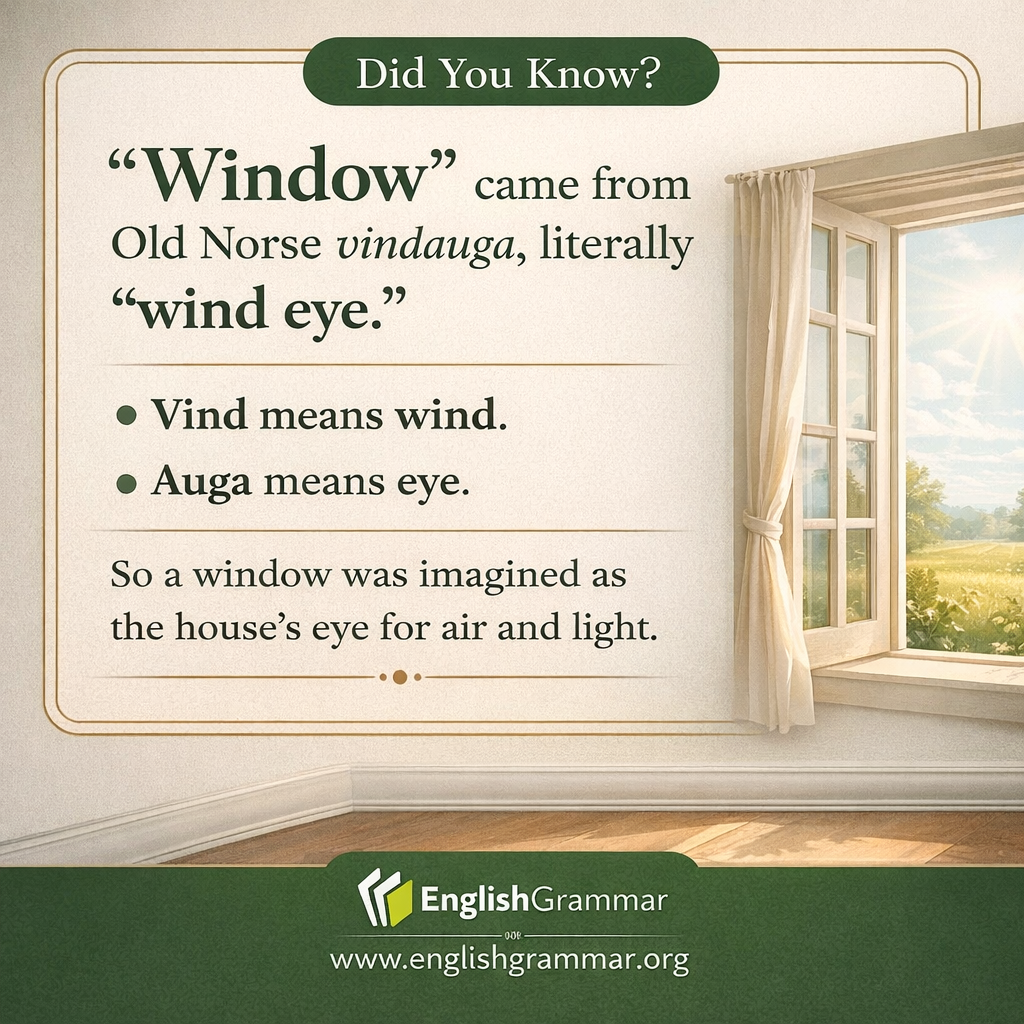
The English word window comes from Old Norse vindauga, which literally meant wind eye. It combines vind, meaning wind, and auga, meaning eye.

That image makes sense when you picture what a window does. It is an opening in a wall that lets in air and light. In that older way of thinking, a house could have an eye, and that eye faced the outside world.

This is one reason word history is so memorable. Old compounds often describe an object by its job or appearance.

  • vind = wind
  • auga = eye
  • vindauga = wind eye

Modern English speakers do not usually feel that meaning when they say window, but the older picture is still hidden inside the word. It is a small example of how everyday vocabulary can preserve very old metaphors.

So when you hear window, you are hearing a centuries old phrase that once described a house opening as its eye for wind and light.

  • Share
  • Post
  • Post
  • Email
NEW: Try Matches, our daily vocabulary challenge. Pick a topic and level and match words with definitions to boost your vocabulary.
2,485,429 
761,532 
Improve Your Grammar
  • Download 2026 Grammar Guide (PDF)
  • Free Weekly Exercises & Vocabulary
  • Join over 3 Million English Learners
We respect your privacy. Unsubscribe anytime.

Grammar Checker

GrammarCheck.net - Try online
Hint → Bookmark GrammarCheck for future use.

Latest Posts

  • Where “go belly up” comes from, and how we use it now May 20, 2026
  • 100 Best Synonyms for “Inflexible” May 20, 2026
  • 100 Words Every Used Car Buyer Should Know May 20, 2026
  • 100 Words to Describe Gratitude May 20, 2026
  • Common Superlatives Exercise May 20, 2026
  • 100 Sentence Starters for Topic Sentences May 20, 2026
  • What “cut and dried” means, and where it probably came from May 20, 2026

Copyright © 2026 · EnglishGrammar.org
Disclaimer · Privacy Policy · Sitemap · Terms

Improve Your Grammar
  • Download 2026 Grammar Guide (PDF)
  • Free Weekly Exercises & Vocabulary
  • Join over 3 Million English Learners
We respect your privacy. Unsubscribe anytime.