
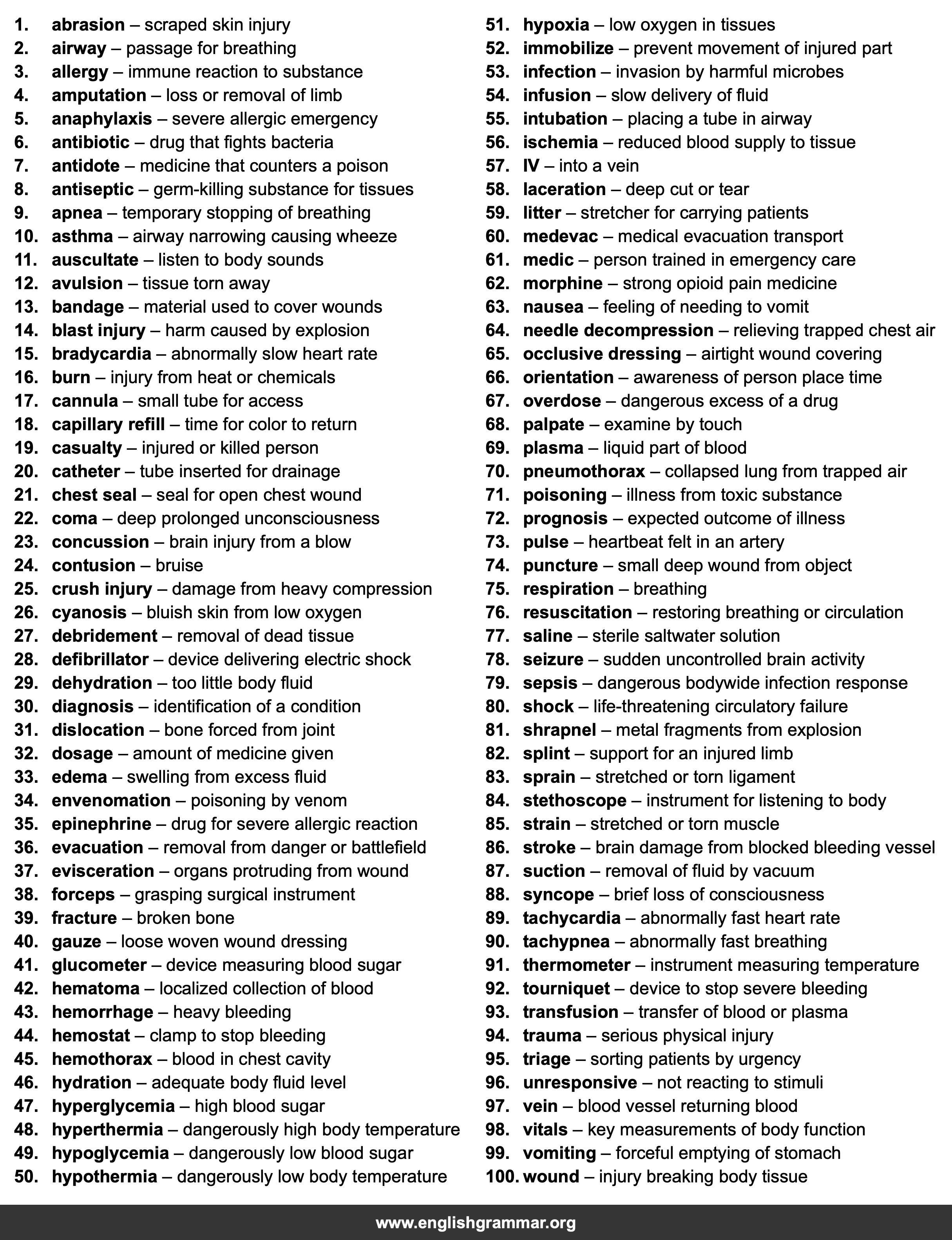
| No. | Item | Definition |
|---|---|---|
| 1. | abrasion | scraped skin injury |
| 2. | airway | passage for breathing |
| 3. | allergy | immune reaction to substance |
| 4. | amputation | loss or removal of limb |
| 5. | anaphylaxis | severe allergic emergency |
| 6. | antibiotic | drug that fights bacteria |
| 7. | antidote | medicine that counters a poison |
| 8. | antiseptic | germ-killing substance for tissues |
| 9. | apnea | temporary stopping of breathing |
| 10. | asthma | airway narrowing causing wheeze |
| 11. | auscultate | listen to body sounds |
| 12. | avulsion | tissue torn away |
| 13. | bandage | material used to cover wounds |
| 14. | blast injury | harm caused by explosion |
| 15. | bradycardia | abnormally slow heart rate |
| 16. | burn | injury from heat or chemicals |
| 17. | cannula | small tube for access |
| 18. | capillary refill | time for color to return |
| 19. | casualty | injured or killed person |
| 20. | catheter | tube inserted for drainage |
| 21. | chest seal | seal for open chest wound |
| 22. | coma | deep prolonged unconsciousness |
| 23. | concussion | brain injury from a blow |
| 24. | contusion | bruise |
| 25. | crush injury | damage from heavy compression |
| 26. | cyanosis | bluish skin from low oxygen |
| 27. | debridement | removal of dead tissue |
| 28. | defibrillator | device delivering electric shock |
| 29. | dehydration | too little body fluid |
| 30. | diagnosis | identification of a condition |
| 31. | dislocation | bone forced from joint |
| 32. | dosage | amount of medicine given |
| 33. | edema | swelling from excess fluid |
| 34. | envenomation | poisoning by venom |
| 35. | epinephrine | drug for severe allergic reaction |
| 36. | evacuation | removal from danger or battlefield |
| 37. | evisceration | organs protruding from wound |
| 38. | forceps | grasping surgical instrument |
| 39. | fracture | broken bone |
| 40. | gauze | loose woven wound dressing |
| 41. | glucometer | device measuring blood sugar |
| 42. | hematoma | localized collection of blood |
| 43. | hemorrhage | heavy bleeding |
| 44. | hemostat | clamp to stop bleeding |
| 45. | hemothorax | blood in chest cavity |
| 46. | hydration | adequate body fluid level |
| 47. | hyperglycemia | high blood sugar |
| 48. | hyperthermia | dangerously high body temperature |
| 49. | hypoglycemia | dangerously low blood sugar |
| 50. | hypothermia | dangerously low body temperature |
| 51. | hypoxia | low oxygen in tissues |
| 52. | immobilize | prevent movement of injured part |
| 53. | infection | invasion by harmful microbes |
| 54. | infusion | slow delivery of fluid |
| 55. | intubation | placing a tube in airway |
| 56. | ischemia | reduced blood supply to tissue |
| 57. | IV | into a vein |
| 58. | laceration | deep cut or tear |
| 59. | litter | stretcher for carrying patients |
| 60. | medevac | medical evacuation transport |
| 61. | medic | person trained in emergency care |
| 62. | morphine | strong opioid pain medicine |
| 63. | nausea | feeling of needing to vomit |
| 64. | needle decompression | relieving trapped chest air |
| 65. | occlusive dressing | airtight wound covering |
| 66. | orientation | awareness of person place time |
| 67. | overdose | dangerous excess of a drug |
| 68. | palpate | examine by touch |
| 69. | plasma | liquid part of blood |
| 70. | pneumothorax | collapsed lung from trapped air |
| 71. | poisoning | illness from toxic substance |
| 72. | prognosis | expected outcome of illness |
| 73. | pulse | heartbeat felt in an artery |
| 74. | puncture | small deep wound from object |
| 75. | respiration | breathing |
| 76. | resuscitation | restoring breathing or circulation |
| 77. | saline | sterile saltwater solution |
| 78. | seizure | sudden uncontrolled brain activity |
| 79. | sepsis | dangerous bodywide infection response |
| 80. | shock | life-threatening circulatory failure |
| 81. | shrapnel | metal fragments from explosion |
| 82. | splint | support for an injured limb |
| 83. | sprain | stretched or torn ligament |
| 84. | stethoscope | instrument for listening to body |
| 85. | strain | stretched or torn muscle |
| 86. | stroke | brain damage from blocked bleeding vessel |
| 87. | suction | removal of fluid by vacuum |
| 88. | syncope | brief loss of consciousness |
| 89. | tachycardia | abnormally fast heart rate |
| 90. | tachypnea | abnormally fast breathing |
| 91. | thermometer | instrument measuring temperature |
| 92. | tourniquet | device to stop severe bleeding |
| 93. | transfusion | transfer of blood or plasma |
| 94. | trauma | serious physical injury |
| 95. | triage | sorting patients by urgency |
| 96. | unresponsive | not reacting to stimuli |
| 97. | vein | blood vessel returning blood |
| 98. | vitals | key measurements of body function |
| 99. | vomiting | forceful emptying of stomach |
| 100. | wound | injury breaking body tissue |