
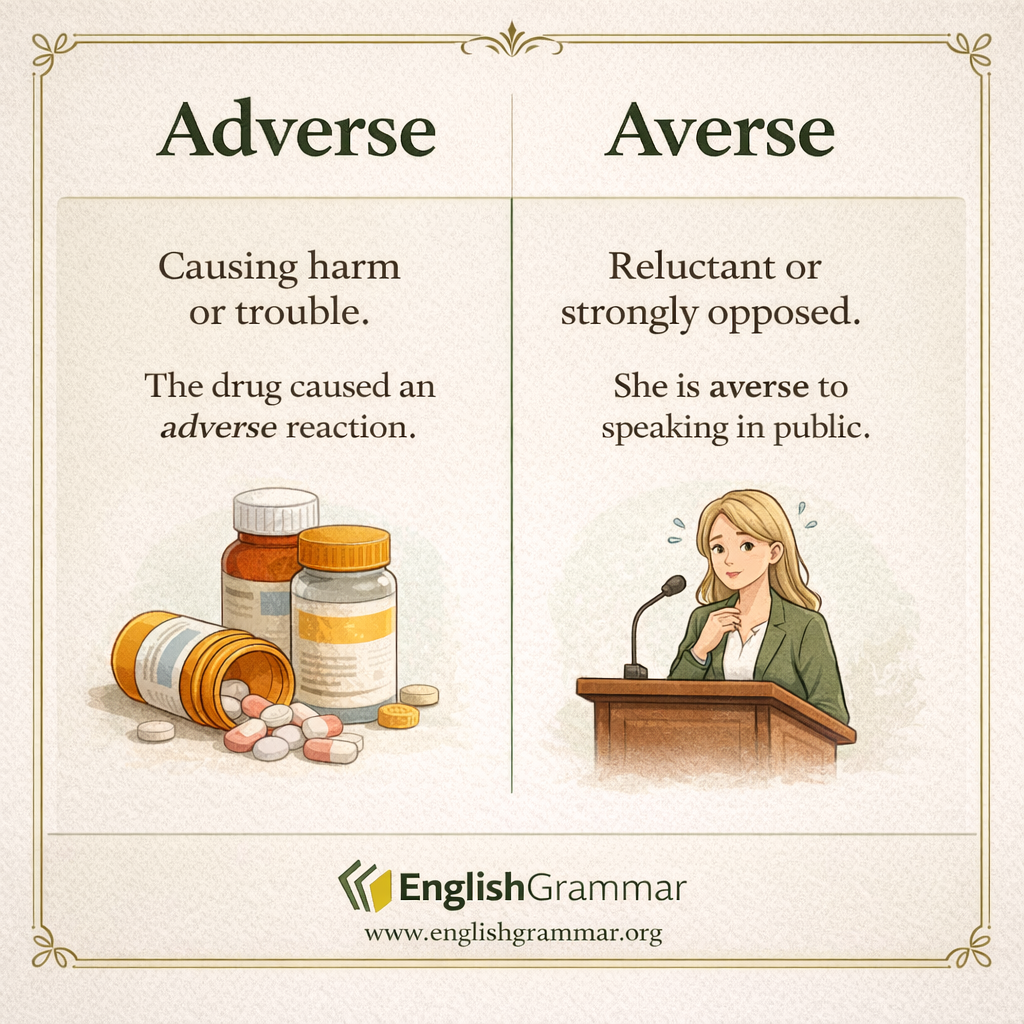
Adverse and averse look similar, but they are used in different ways.
Adverse means harmful, negative, or unfavorable. It usually describes conditions, effects, or outcomes. You might see it in phrases like adverse weather, adverse reaction, or adverse effects.
Averse means unwilling, resistant, or strongly opposed. It describes a person’s attitude or feeling, and it is often followed by to. For example, someone can be averse to change or averse to taking risks.
- The patient had an adverse reaction to the medication.
- He is averse to eating spicy food.
A simple way to remember the difference is this: adverse is about bad results, while averse is about dislike or resistance.
If the word describes a harmful situation, choose adverse. If it describes someone not wanting something, choose averse.
