
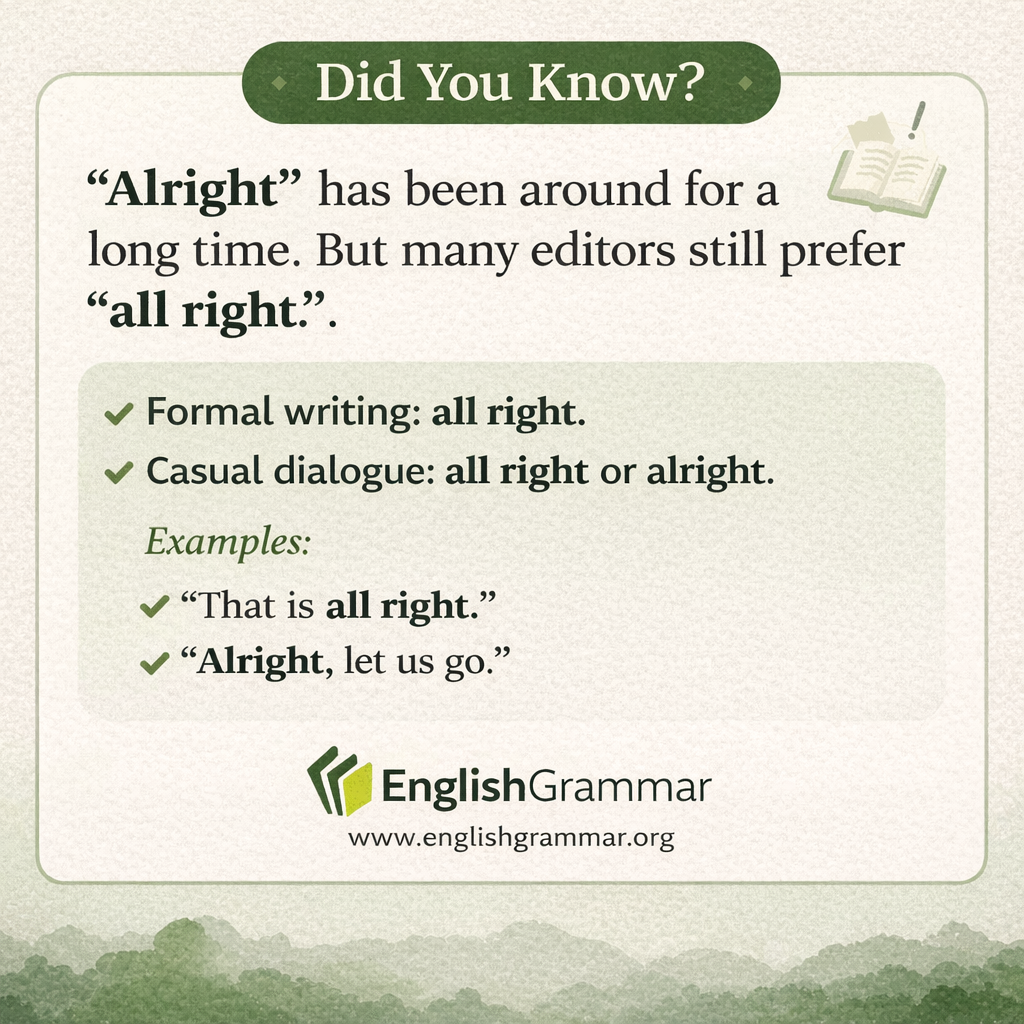
Alright is not a modern mistake. It has appeared in print for well over a century, and many readers accept it without noticing anything unusual.
Still, many editors and style guides prefer all right, especially in formal, academic, and professional writing. That preference is mostly about convention, not meaning. In most contexts, the two forms mean the same thing.
A simple rule works well:
- Formal writing: use all right. Example: Your application is all right as submitted.
- Casual writing or dialogue: alright may appear, especially to reflect a natural voice. Example: Alright, I will call you later.
Some people feel that alright looks more informal, while all right looks more standard and careful. Because of that, choosing all right is often the safer option when tone matters.
If you are writing for a teacher, editor, workplace, or publication, all right is usually the better choice. If you are writing fiction, messages, or casual content, alright may fit the voice you want.
