
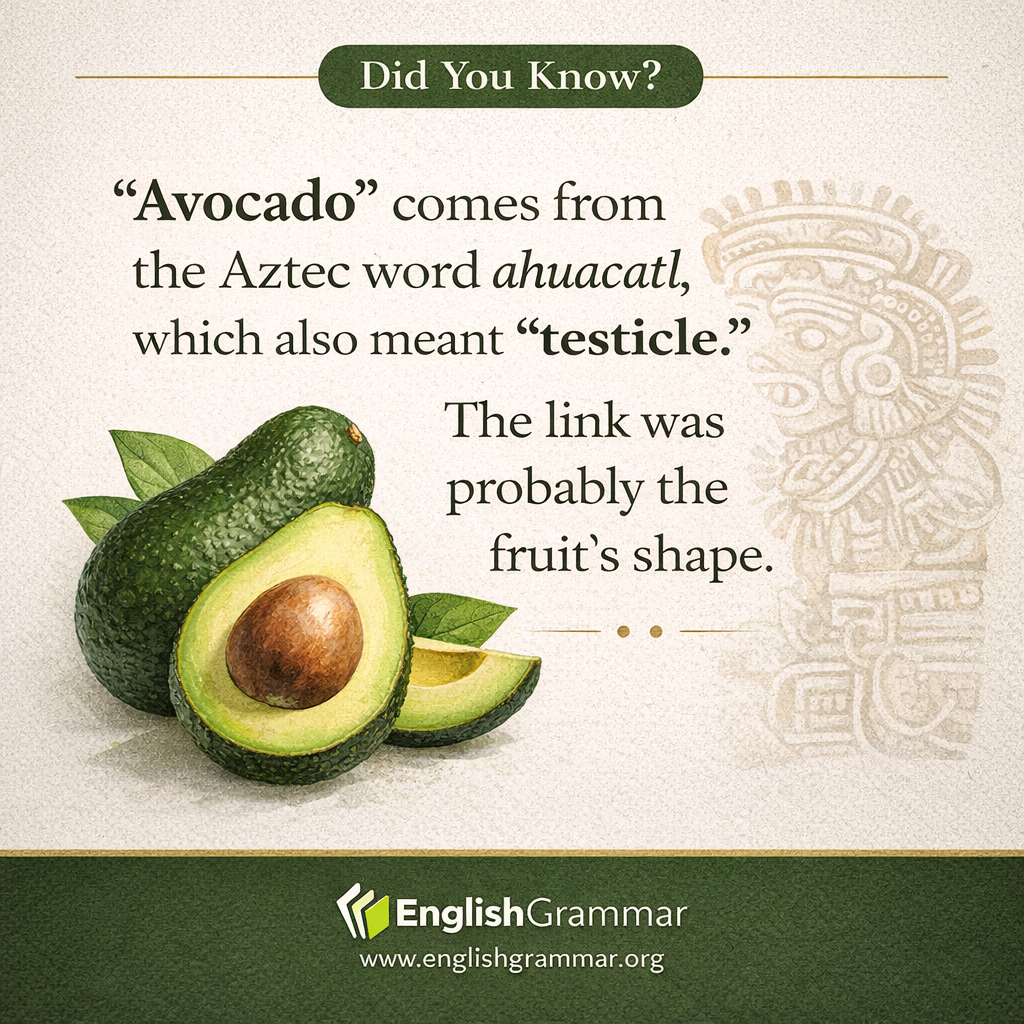
The English word avocado has an unusual history. It ultimately comes from ahuacatl, a word from Nahuatl, the language spoken by the Aztecs and still spoken in parts of Mexico. In Nahuatl, ahuacatl could mean both avocado and testicle.
Why the double meaning? Most historians and language sources point to the fruit’s shape. Many languages reuse existing words for new things when they look similar, so this kind of semantic overlap is not rare.
As the word moved through Spanish into English, its form changed. Spanish used aguacate, and English later developed avocado. The meaning in modern English is only the fruit, not the older anatomical sense.
Here is a simple contrast:
- Modern English: I sliced an avocado for lunch.
- Historical source meaning: In Nahuatl, ahuacatl could refer to the fruit or to a testicle.
So the surprising part is true, but it is really a story about how words travel, shift in form, and narrow in meaning over time.
