
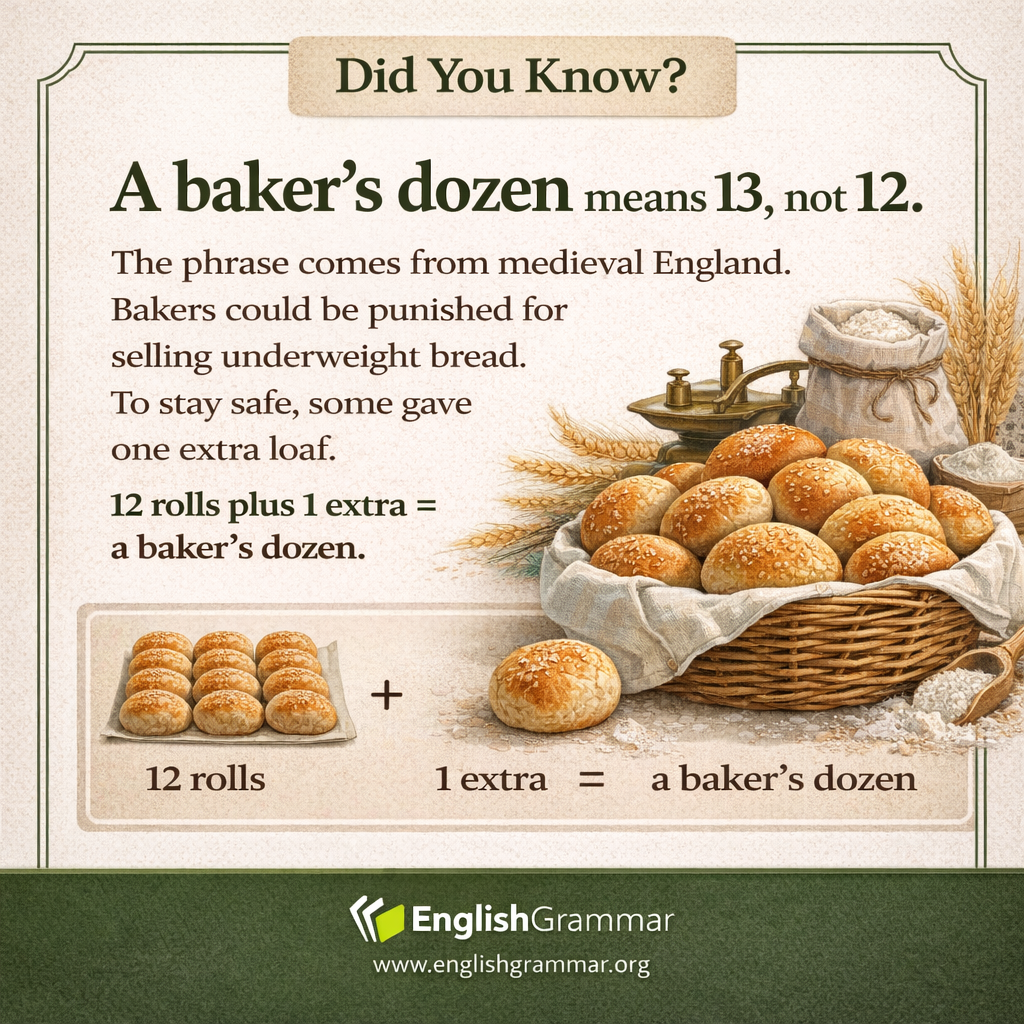
A baker’s dozen means 13 items instead of 12. The expression is usually linked to medieval England, when bread was closely regulated by law. Bakers could be fined or punished if a loaf weighed less than it was supposed to.
Because weight could vary during baking, some bakers are said to have added an extra loaf when selling a dozen. That extra item gave them a margin of safety and helped them avoid accidentally selling too little bread.
For example, if a customer ordered 12 rolls, the baker might give 13. Over time, this practice became associated with bakers, and the phrase a baker’s dozen came to mean any group of 13.
- Regular dozen: 12 eggs, 12 donuts, 12 months
- Baker’s dozen: 13 rolls, 13 bagels, 13 cookies
Today, people often use the phrase more generally, even when no baker is involved. It is a small reminder of how trade rules and everyday business practices can leave a lasting mark on language.