
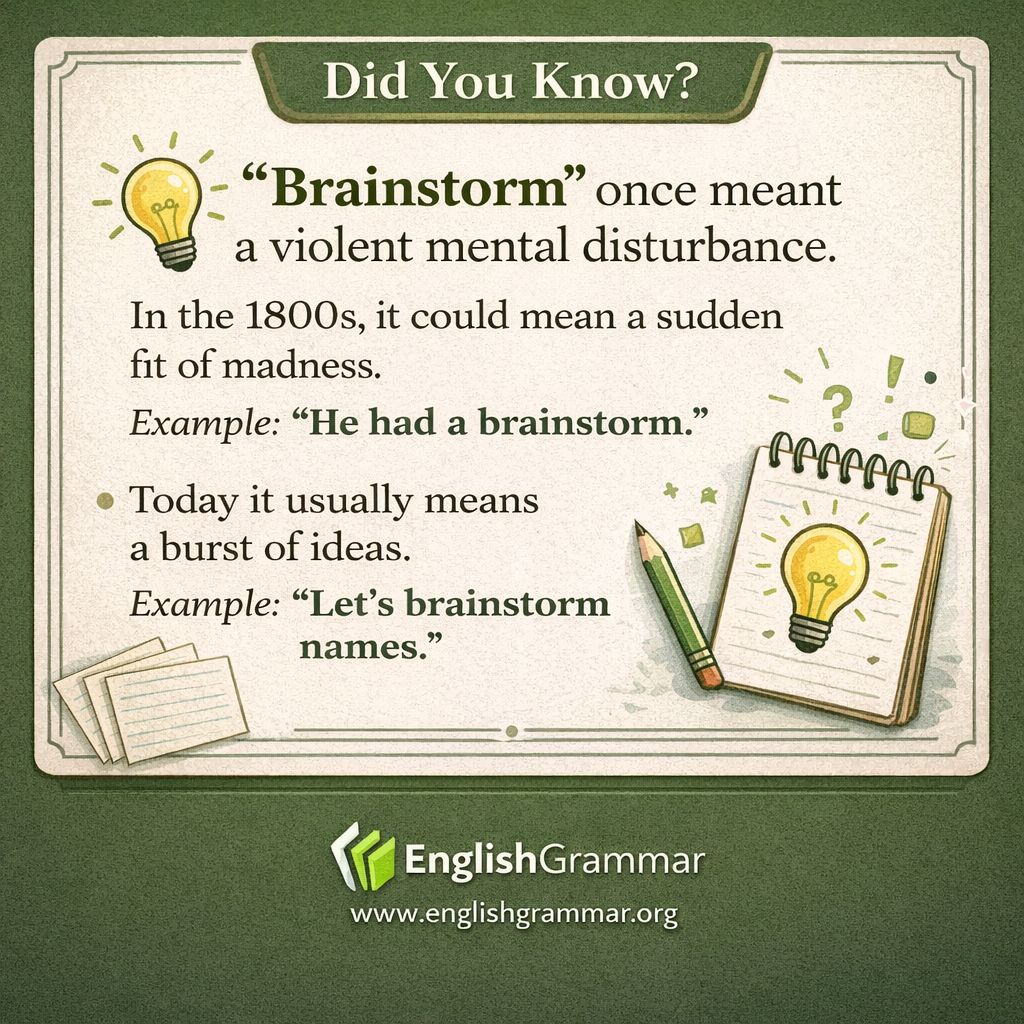
Brainstorm did not always mean a creative group activity. In the 1800s, it was often used for a sudden, violent mental disturbance, sometimes described as a fit of madness or temporary insanity.
That older meaning is now dated and can sound harsh to modern readers. Over time, the word developed a new, much more common sense: a quick burst of ideas or a session for generating ideas.
- Older use: “The witness suffered a brainstorm.”
- Modern use: “We brainstormed ideas for the new logo.”
This kind of shift is common in English. A word can move far from its earlier meaning as culture and usage change. Today, most people understand brainstorm in the creative sense, especially in school, business, and writing. Still, knowing the older meaning helps explain why some style guides and disability advocates have questioned the term and suggested alternatives such as idea session or think together.