
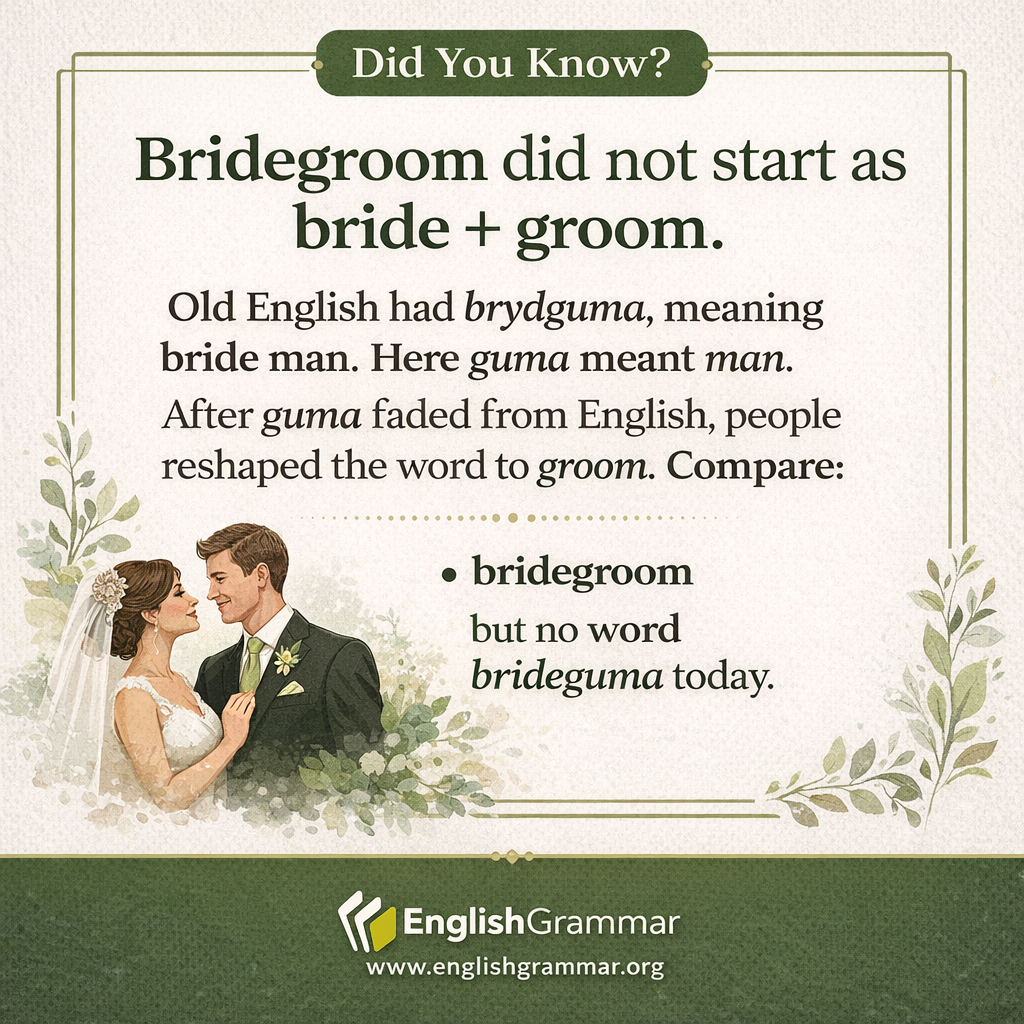
Bridegroom looks as if it is made from bride and groom. Historically, though, that is not how the word began.
In Old English, the form was brydguma. The first part meant bride, and the second part, guma, meant man. So the original sense was essentially bride man, meaning a man who is getting married.
Later, guma disappeared from everyday English. Once speakers no longer recognized that old word, they reshaped brydguma into bridegroom, using the familiar word groom. This kind of change is called folk etymology, where people remake an unfamiliar word into something that feels more understandable.
- Older form: brydguma = bride + man
- Modern form: bridegroom = reshaped by later speakers
- Important point: the original word did not contain the modern noun groom
A useful contrast is this: we still say bridegroom, but we do not use guma as a normal word for man anymore. That lost older element is what made the form change over time.
