
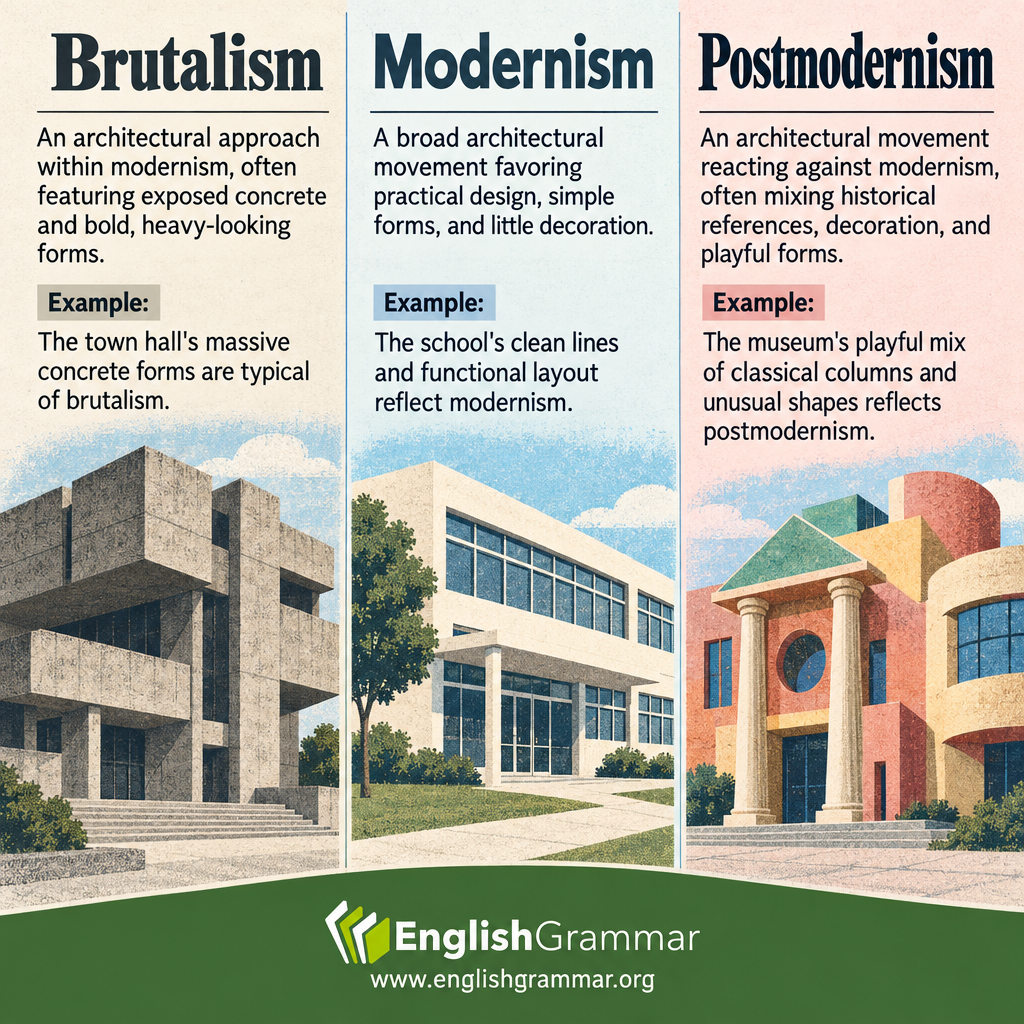
These terms describe architectural approaches, but they are not three completely separate categories. Modernism is the broad movement; brutalism developed within it. Postmodernism challenged many modernist ideas.
Modernism generally favors practical design, simple forms, and little applied decoration. Architects often used materials such as steel, glass, and concrete without copying older styles. Use this term for the broader approach, not just buildings that look new. For example, a glass office tower with a plain exterior may show modernist design.
Brutalism often makes a building’s materials, structure, and large shapes especially noticeable. Exposed concrete is common, but concrete alone does not make a building brutalist, and some examples use other materials. A library with massive concrete walls and deeply recessed windows might fit this description. Use the narrower term when these qualities matter to your discussion.
Postmodernism often brings back decoration and references to older architecture, sometimes with playful combinations or unexpected proportions. For example, an office building might combine a modern structure with oversized classical columns. Use this term for that design approach, not simply for any building constructed after a modernist one.
- A building can be both brutalist and modernist.
- A plain concrete building is not automatically brutalist.
- A recently built building is not automatically postmodernist.
The key is to describe the building’s design approach, rather than judging its age or choosing a label from one material alone.
