
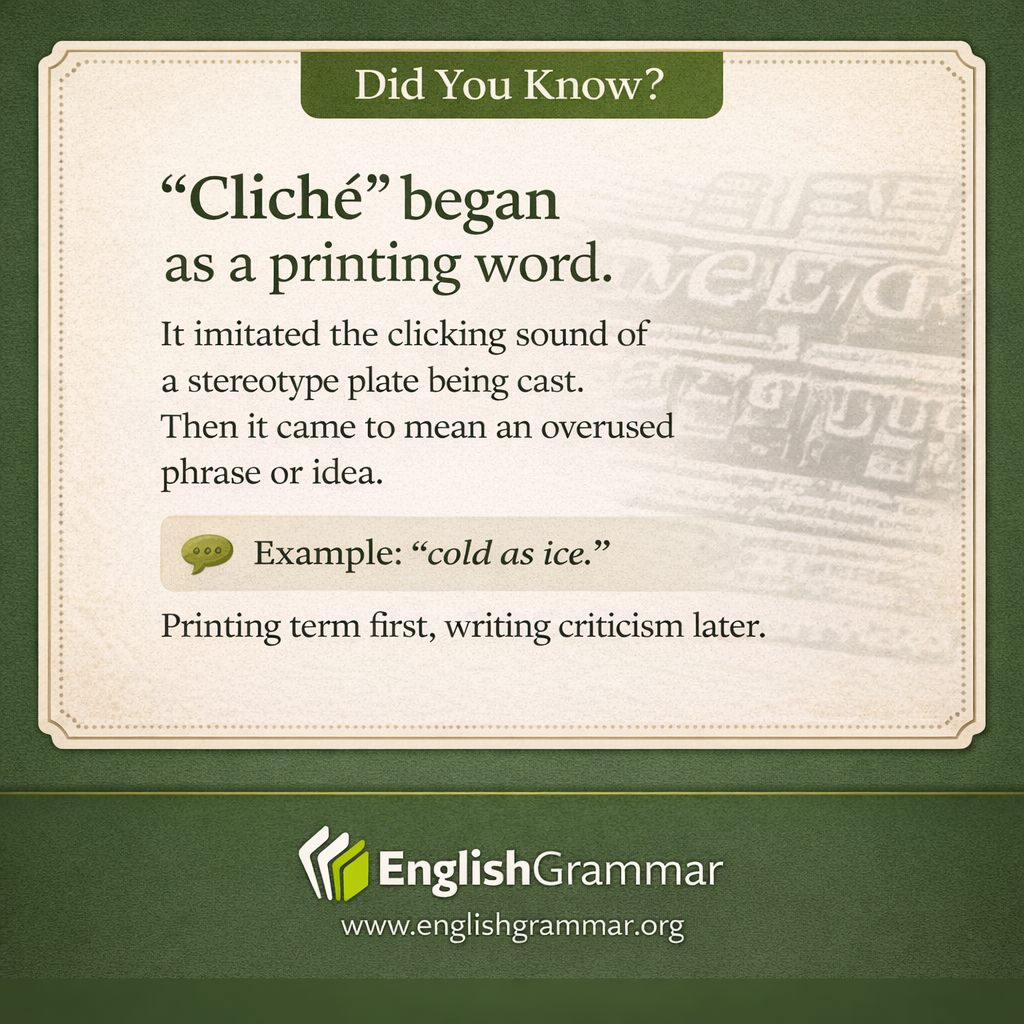
Cliche did not begin as a criticism of lazy writing. It started as a printing term in French. The word is generally linked to the clicking sound made when a stereotype plate or mold was cast. In other words, it was probably onomatopoeic, a word shaped by a sound.
Later, the meaning widened. Because printing plates allowed the same text to be reproduced again and again, cliche developed the figurative sense of something repeated too often. From there, it became the modern meaning most people know: an overused phrase, image, or idea.
- Original sense: a printing sound or printing plate context
- Later sense: a repeated expression or thought
- Example: cold as ice is often called a cliche because readers have seen it many times before
This history makes the modern meaning easier to remember. The word moved from mechanical repetition in printing to stylistic repetition in language. So when someone calls a phrase a cliche, they are pointing out that it feels copied, familiar, and no longer fresh.