
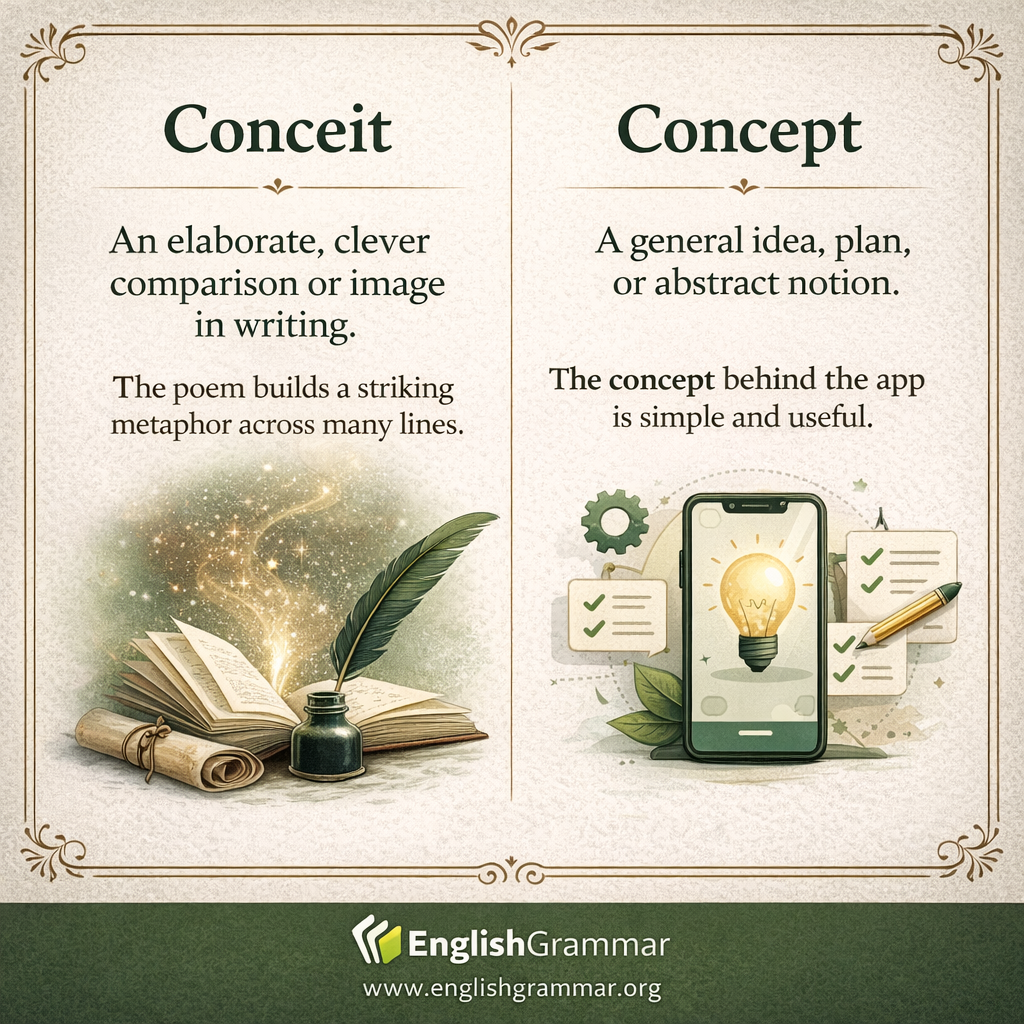
Conceit and concept can sound similar, but they belong in different contexts.
Conceit is most often used in literature and rhetoric. It means an extended, often clever comparison or image that runs through part of a poem, passage, or argument. For example, a poet might compare love to a voyage and develop that image across many lines. That sustained comparison is a conceit.
Concept is much broader. It means an idea, a plan, or an abstract principle. You can talk about the concept for a new app, the concept of justice, or the concept behind a lesson. For example, The concept behind the app is simple and useful.
- Use conceit for a crafted literary comparison or image.
- Use concept for a general idea, design, or theory.
- If you mean the central thought behind something, concept is usually the right choice.
A quick test helps: if you are discussing writing technique or poetic imagery, choose conceit. If you are discussing an idea or plan, choose concept.