
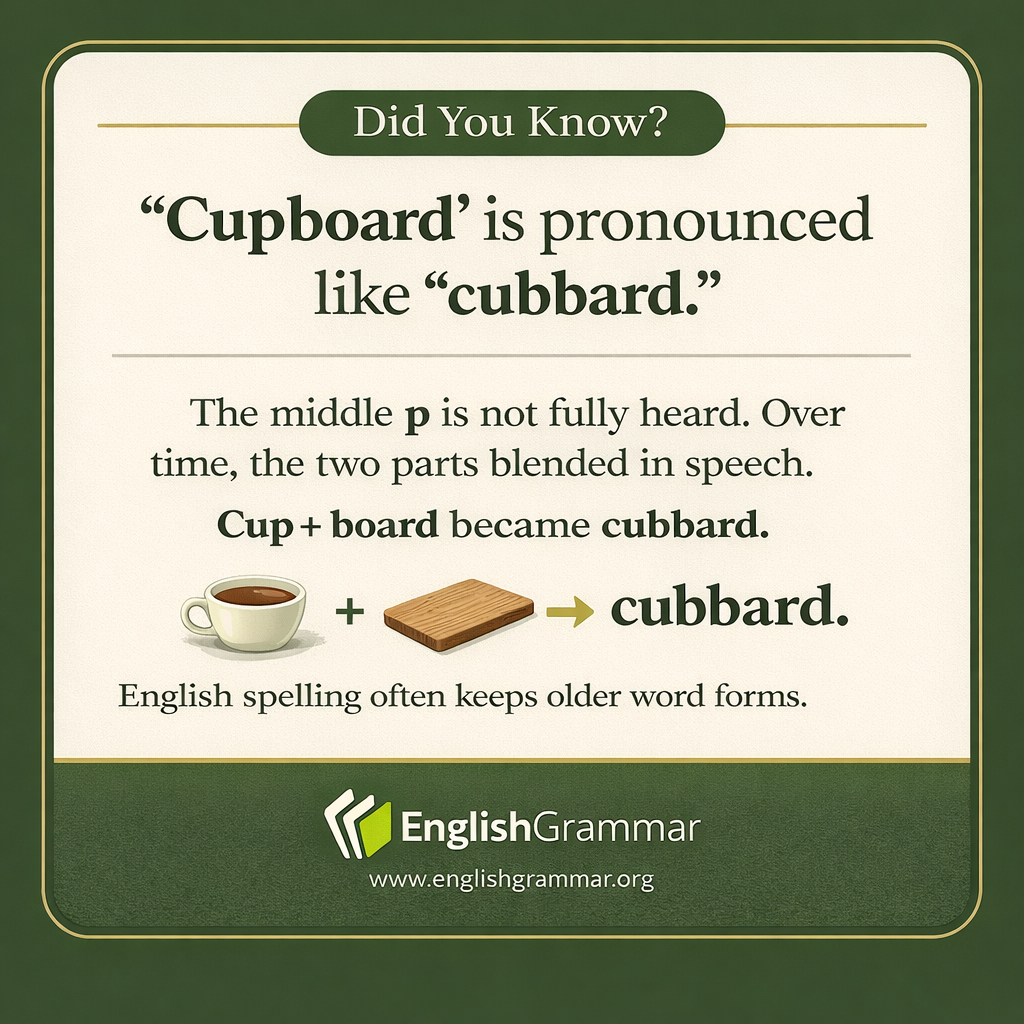
“Cupboard” is a good example of how English spelling and pronunciation do not always change together. The word began as two parts, cup and board. A cupboard was originally a board or table used to hold cups and dishes.
Over time, people said the word faster and more smoothly in everyday speech. When that happened, the sounds blended. Instead of clearly saying cup board, speakers gradually moved toward cubbard. The p is still visible in the spelling, but it is not fully pronounced in the modern word.
This happens in other English words too. Spelling often keeps an older form even after pronunciation has shifted. That is why a word can look very logical on the page but sound different in conversation.
- Spelling: cupboard
- Pronunciation: cubbard
- Older parts: cup + board
So the short answer is simple: “cupboard” sounds like “cubbard” because everyday pronunciation changed over time, while the spelling stayed closer to the older form.
