
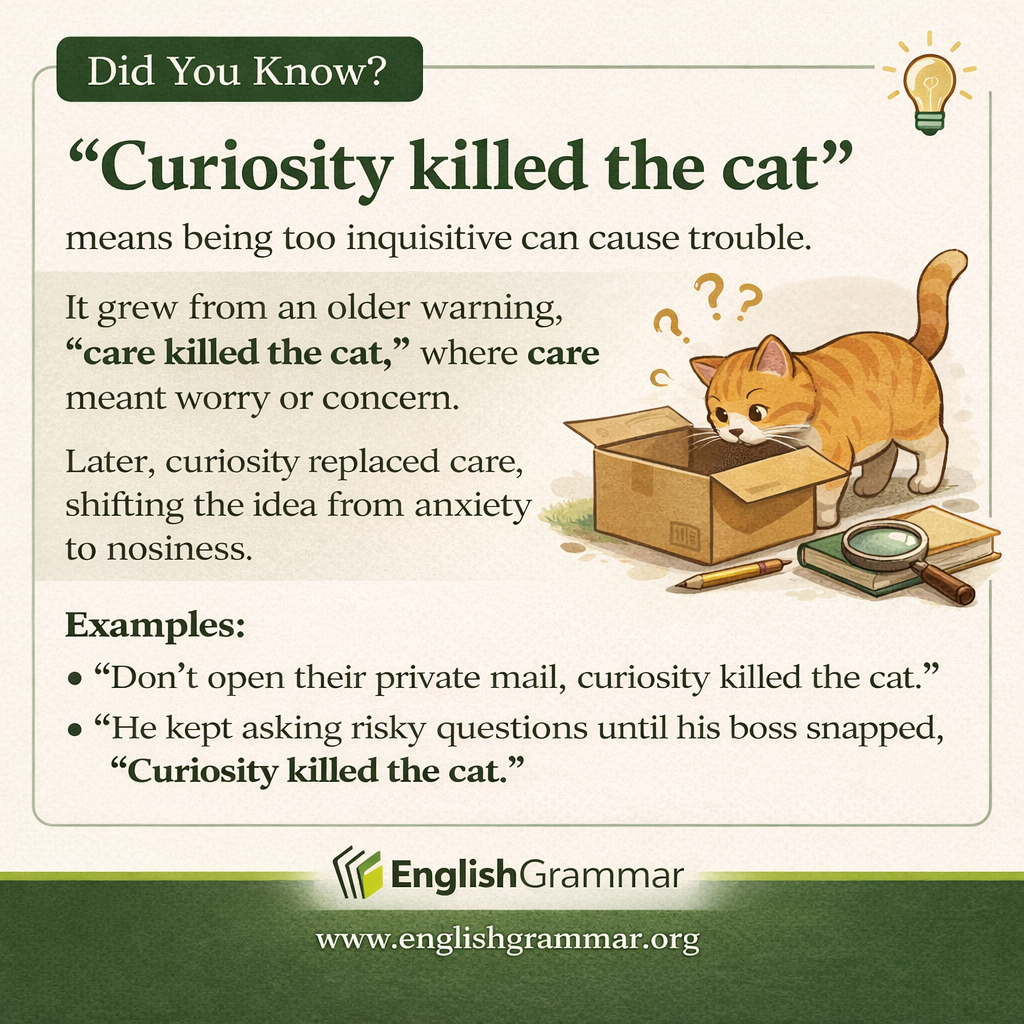
“Curiosity killed the cat” is used as a warning. Today, it means that asking too many questions or poking into something can lead to trouble.
What makes this phrase interesting is that it did not begin in that form. An older version was “care killed the cat”. In early English, care often meant worry, sorrow, or mental burden. The idea was that too much anxiety could wear someone down, even a cat, an animal often associated with toughness or having many lives.
Over time, people replaced care with curiosity. That changed the meaning. Instead of warning about harmful worry, the phrase became a warning about nosiness or risky investigation.
- Modern meaning: being too inquisitive can bring problems.
- Older meaning: too much worry can be destructive.
- Example: “Don’t dig through their messages, curiosity killed the cat.”
Sometimes people add a playful reply, “but satisfaction brought it back,” to suggest that finding the answer was worth the risk. Still, the main use is cautionary, especially when someone is prying into private or risky matters.
