
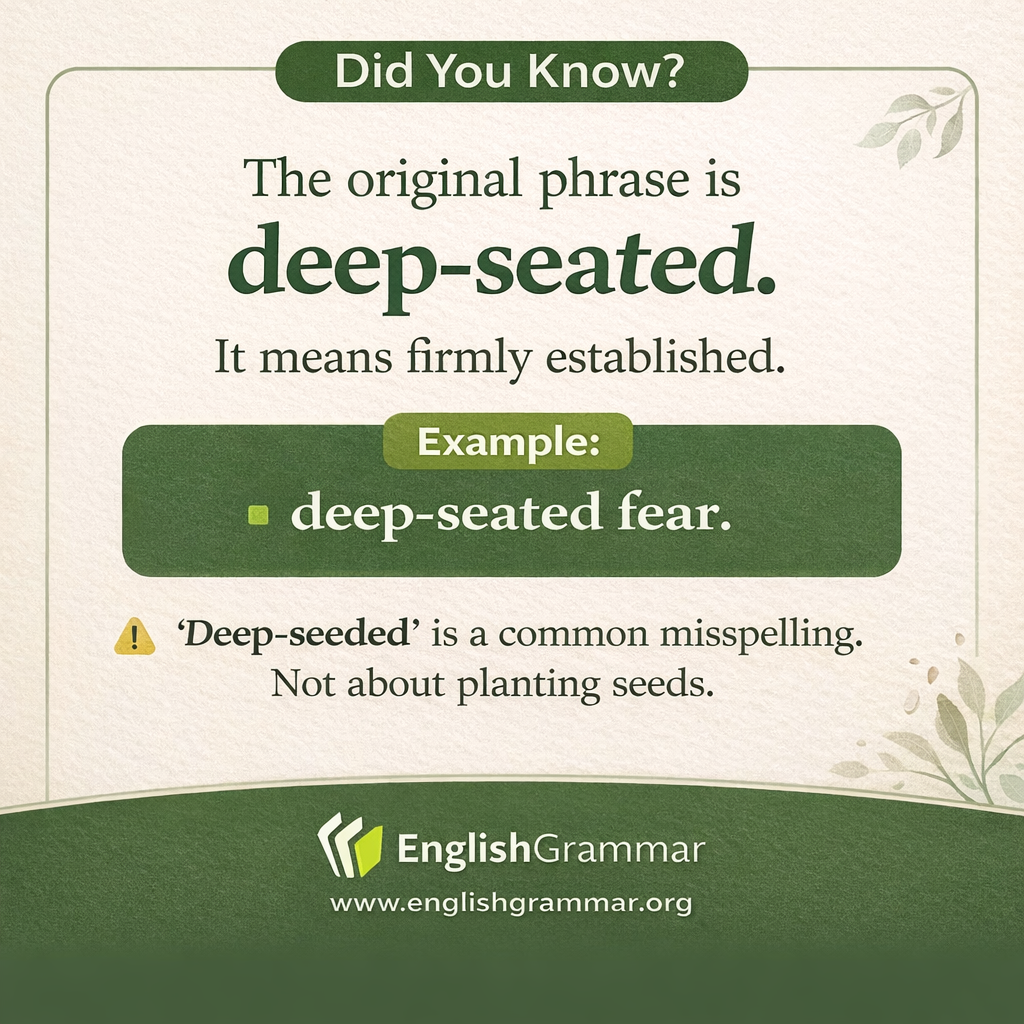
Deep-seated is the original and standard phrase. It means firmly established, often in a way that is hard to change. You will usually see it describing feelings, beliefs, habits, or problems.
For example, you might write: a deep-seated fear of failure or deep-seated mistrust. In both cases, the idea is that something sits deep within a person or situation.
Deep-seeded is common in informal writing, but it is generally treated as a misspelling of deep-seated. People often write it because it sounds similar and because seed suggests something that grows from an origin. That association makes intuitive sense, but it is not the standard form.
- Correct: deep-seated resentment
- Correct: deep-seated problem
- Usually avoided: deep-seeded resentment
If you want the conventional wording in edited English, choose deep-seated.
