
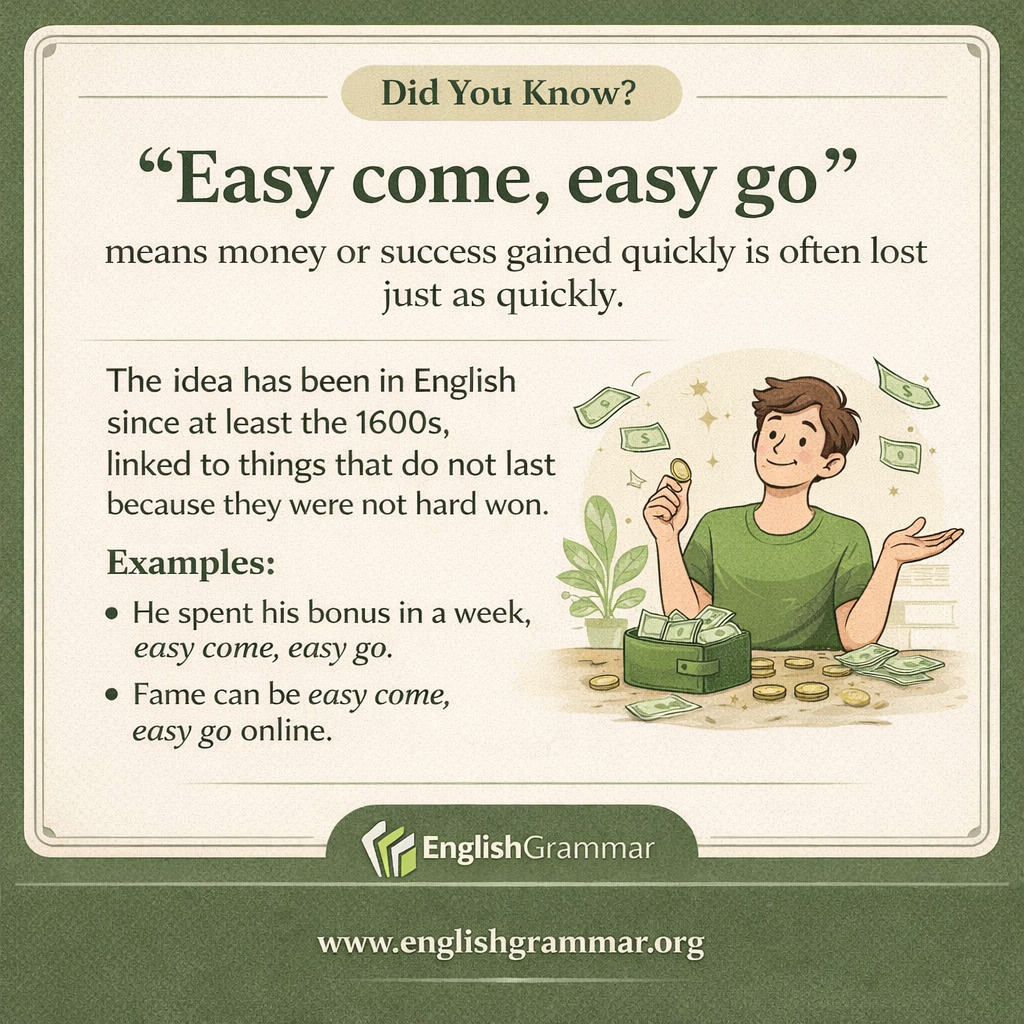
“Easy come, easy go” is a common English saying about money, luck, success, or other things that arrive quickly and leave quickly. It often carries a note of acceptance, as if the speaker is saying, “I did not keep it for long, and that is life.”
The expression has been around since at least the 1600s. The basic idea is simple: when something comes easily, people may value it less, protect it less, or find that it was never very stable in the first place. That is why it can also suggest that quick gains are often temporary.
People use it in two main ways:
- To describe something temporary, especially money or success.
- To react calmly after losing something that was gained without much effort.
For example, someone might say, He spent his bonus in a week, easy come, easy go. A person talking about internet attention might say, Fame can be easy come, easy go online.
The phrase is usually informal. It is common in conversation, and it works best when the speaker wants to sound realistic rather than deeply upset. It does not mean every easy gain will be lost, but it expresses a very common pattern and attitude.
