
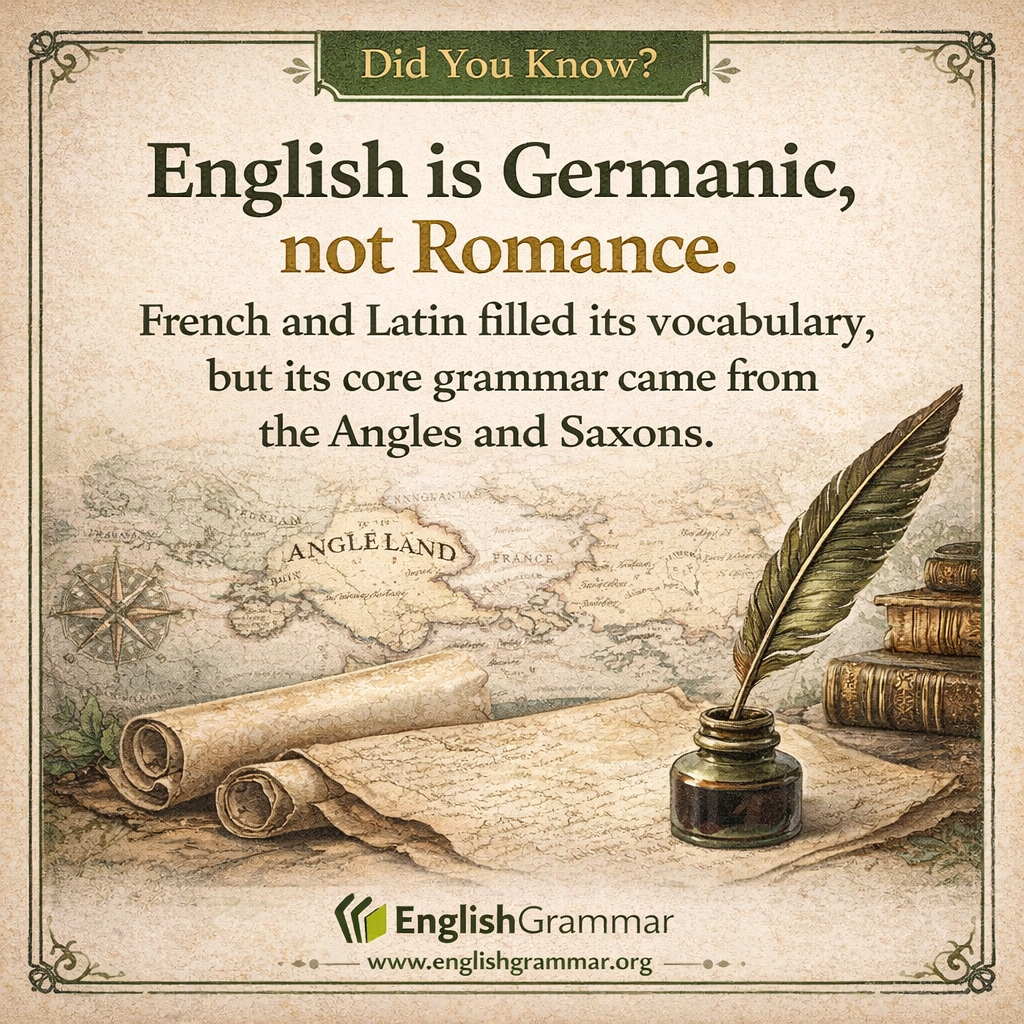
English is a Germanic language, even though a large part of its vocabulary comes from French and Latin. Its earliest form, Old English, was brought to Britain by Germanic speaking groups, especially the Angles, Saxons, and Jutes, starting in the fifth century.
That origin still shows in the words and grammar people use every day. Short basic words such as house, bread, water, mother, and night come from Old English or related Germanic sources. Many common grammar words, including the, is, you, and and, are also part of this older layer.
Later, English absorbed huge numbers of words from French after the Norman Conquest in 1066. Latin also influenced English through religion, law, science, and education. That is why English often has pairs of words with different origins:
- Germanic: ask, kingly, begin
- French or Latin: question, royal, commence
The grammar is still strongly Germanic. For example, irregular verb patterns like sing, sang, sung are related to older Germanic verb systems. A natural sentence is: I sang the song yesterday, but I have sung it many times before.
This mix helps explain why English can feel both familiar and unpredictable: its basic structure is old and Germanic, while much of its formal vocabulary arrived later from French and Latin.
