
• Skip to primary navigation
  • Skip to main content
  • Skip to primary sidebar
Home of English Grammar
  • Home
  • Course
  • Exercises
  • Grammar Rules
  • Matches
  • Posts
  • Tools
    • Grammar Checker
    • Very Replacer
    • Word Counter
  • Vocabulary Lists
  • Archives
    • Social Media Posts
    • Writing Guides
  • Sign in
  • Join free

Why epicurean comes from Epicurus

June 9, 2026

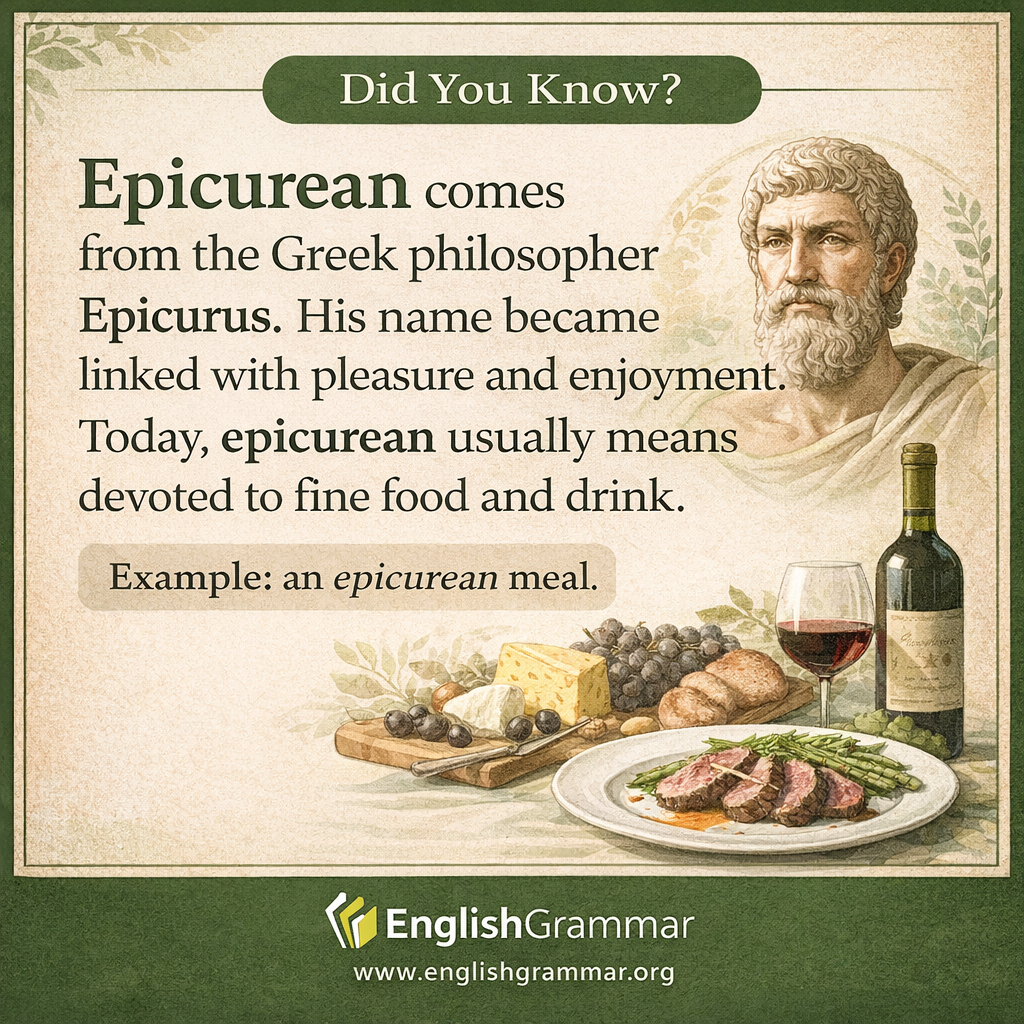
Epicurean comes from the philosopher Epicurus

Epicurean comes from Epicurus, the ancient Greek philosopher who taught that pleasure was an important part of a good life. Originally, the word referred to a follower of his philosophy.

Over time, the meaning shifted in everyday English. Today, epicurean usually describes someone who takes special pleasure in high quality food and drink, or anything associated with refined taste.

For example, you might say:

  • They planned an epicurean weekend filled with tasting menus and local wines.
  • He is an epicurean who loves carefully prepared meals.

This modern meaning reflects only part of Epicurus’s ideas. He did value pleasure, but not endless luxury. In his philosophy, pleasure was closely tied to peace of mind, moderation, and freedom from pain.

So the word has historical roots in philosophy, even though it is now most often connected with gourmet enjoyment.

Improve your English grammar, vocabulary and writing

We take you step by step from beginner to advanced, even if you struggled with English at school or have always had trouble remembering the rules.

  • 10 modules, 112 lessons and 730 questions
  • Just log in and learn anytime and anywhere
  • Your progress is saved in your account
  • Download the 2027 Grammar Guide (PDF)
Join free

Already have an account? Sign in

See what’s in the course

Primary Sidebar

2.4M760.9K165.9K

Free 2027 Grammar Guide

  • Download Grammar Guide (PDF)
  • Online grammar course, A1 to C2
  • Weekly exercises and vocabulary
  • Join over 3 million English learners

We respect your privacy. Unsubscribe anytime.

Already have an account? Sign in

Grammar Checker - Try Now

Latest Posts

  • 100 Best Synonyms for “Truthful” October 31, 2026
  • Hedging Opinions Exercise October 31, 2026
  • Tense Simplification in Headlines Exercise October 31, 2026
  • 100 Best Synonyms for “Deceptive” October 31, 2026
  • 100 Best Synonyms for “Hidden” October 31, 2026
  • 100 Best Synonyms for “Trouble” October 30, 2026
  • 100 Best Synonyms for “Silky” October 30, 2026
  • What is a bibliotaph? October 30, 2026
  • 100 Best Synonyms for “Hateful” October 30, 2026
  • 100 Best Synonyms for “Deceitful” October 30, 2026
Home of English Grammar

Free English grammar exercises, rules and vocabulary lists, with new exercises every week. Join the leading English grammar site with over 3 million followers.

Join free

Learn

  • Exercises
  • Matches
  • Grammar rules
  • Vocabulary lists
  • Writing guides
  • Online tools

More

  • Top social media posts
  • Various posts
  • Contact

Account

  • Join free
  • Grammar Course
  • Free grammar guide (PDF)

Copyright © 2026 EnglishGrammar.org

  • Disclaimer
  • Privacy policy
  • Terms
  • Sitemap