
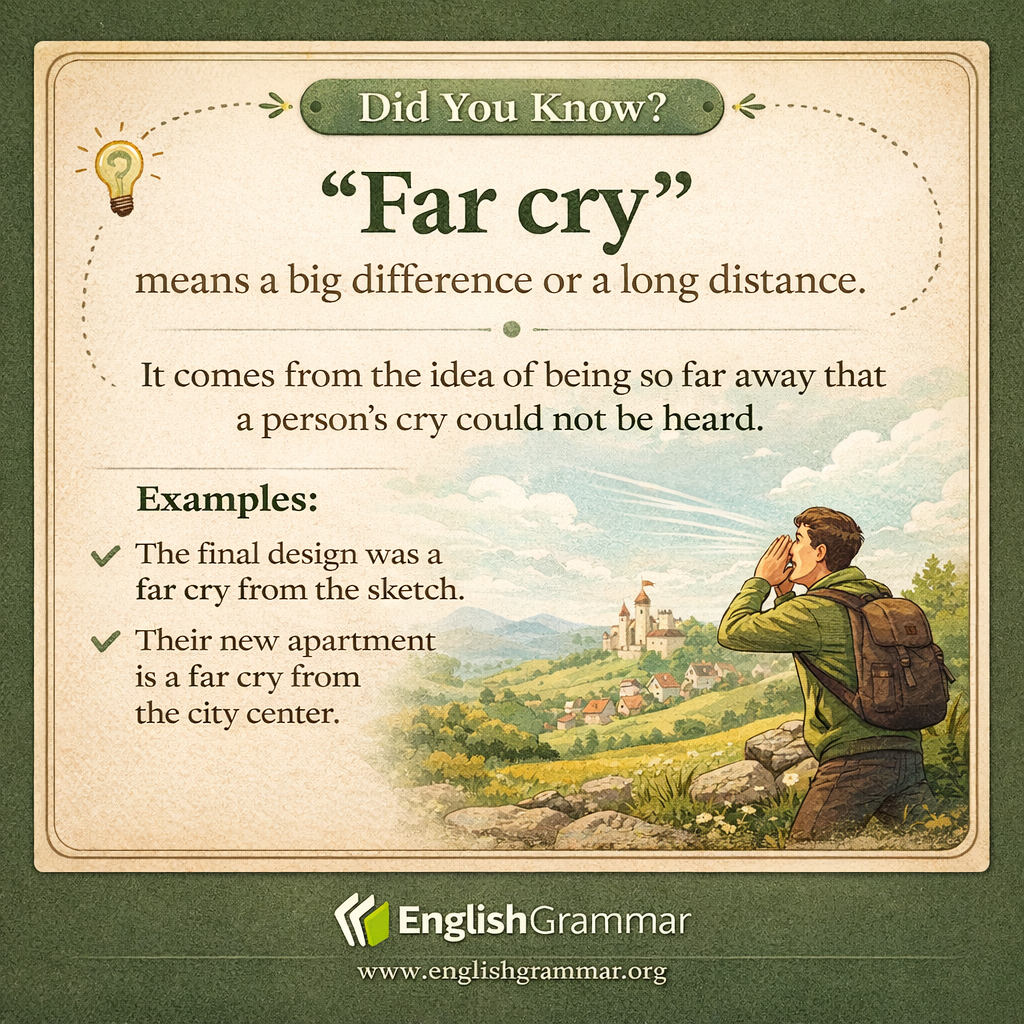
Far cry usually appears in the pattern a far cry from. In modern English, it most often means very different from. It can also keep its older, more literal idea of a long distance, though that use is less common today.
The phrase comes from the image of a person being so far away that a cry, shout, or call could not be heard. That physical distance helped shape the modern figurative meaning. If two things are a far cry from each other, the gap between them feels large.
- The finished movie was a far cry from the director’s original plan.
- Her life now is a far cry from what it was ten years ago.
- The cabin is a far cry from the nearest town.
In everyday use, the figurative sense is much more common than the literal one. People often use it to compare expectations with reality, old versions with new ones, or one situation with another. It is especially useful when different feels too weak and you want to show a clear contrast.