
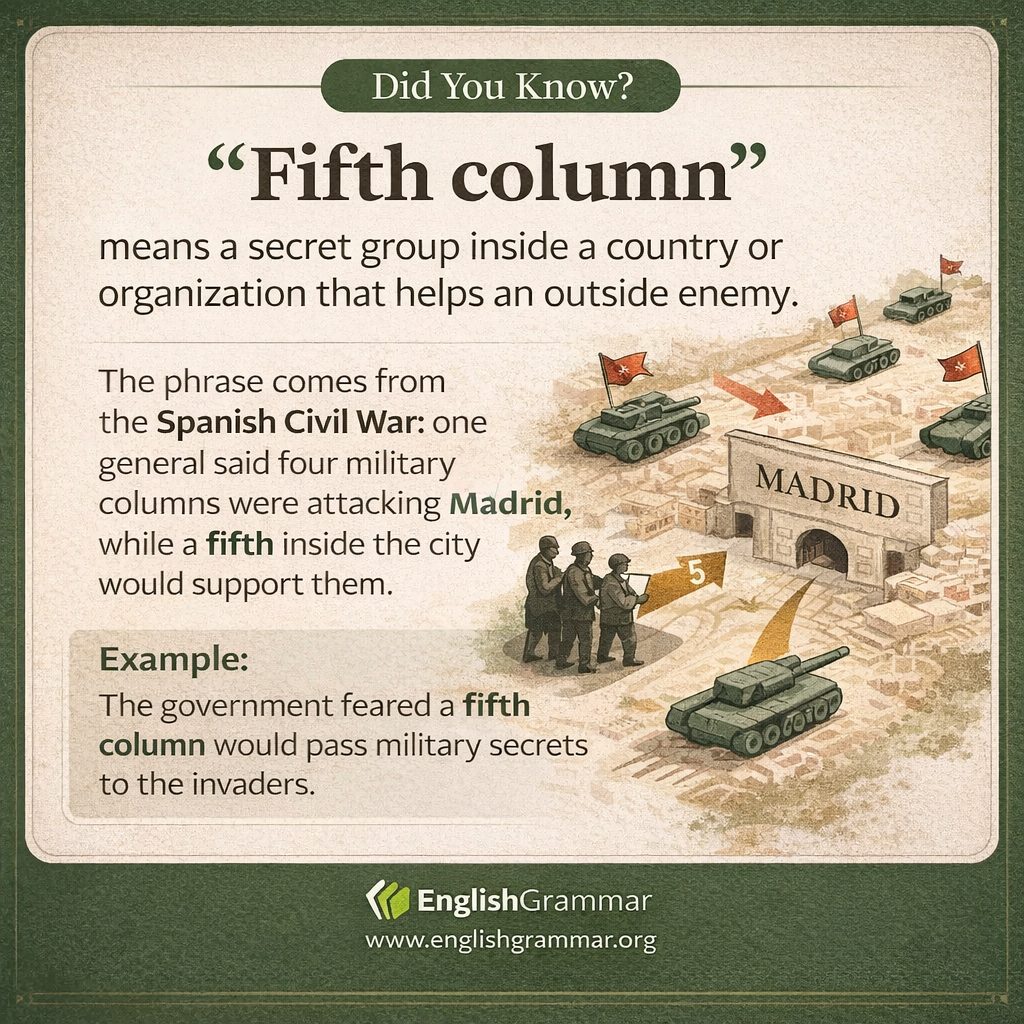
Fifth column is a term for people inside a country, group, or institution who secretly support an outside enemy or rival. The key idea is betrayal from within, not open opposition.
The expression became famous during the Spanish Civil War in 1936. As nationalist forces moved toward Madrid, a general was reported to have said that four military columns were approaching the city, while a fifth column inside Madrid would help from within. That image made the meaning clear: the danger was not only the army outside, but also hidden supporters already on the inside.
Today, the phrase is usually used in political, military, or historical contexts. It can describe spies, saboteurs, or covert sympathizers working to weaken a group from within.
- During the war, leaders feared a fifth column would leak plans to the enemy.
- The article warned that online propaganda could act like a fifth column inside a divided society.
Because the term suggests treachery and internal sabotage, it is a strong and often accusatory label. It should be used carefully, especially in modern political discussion.
