
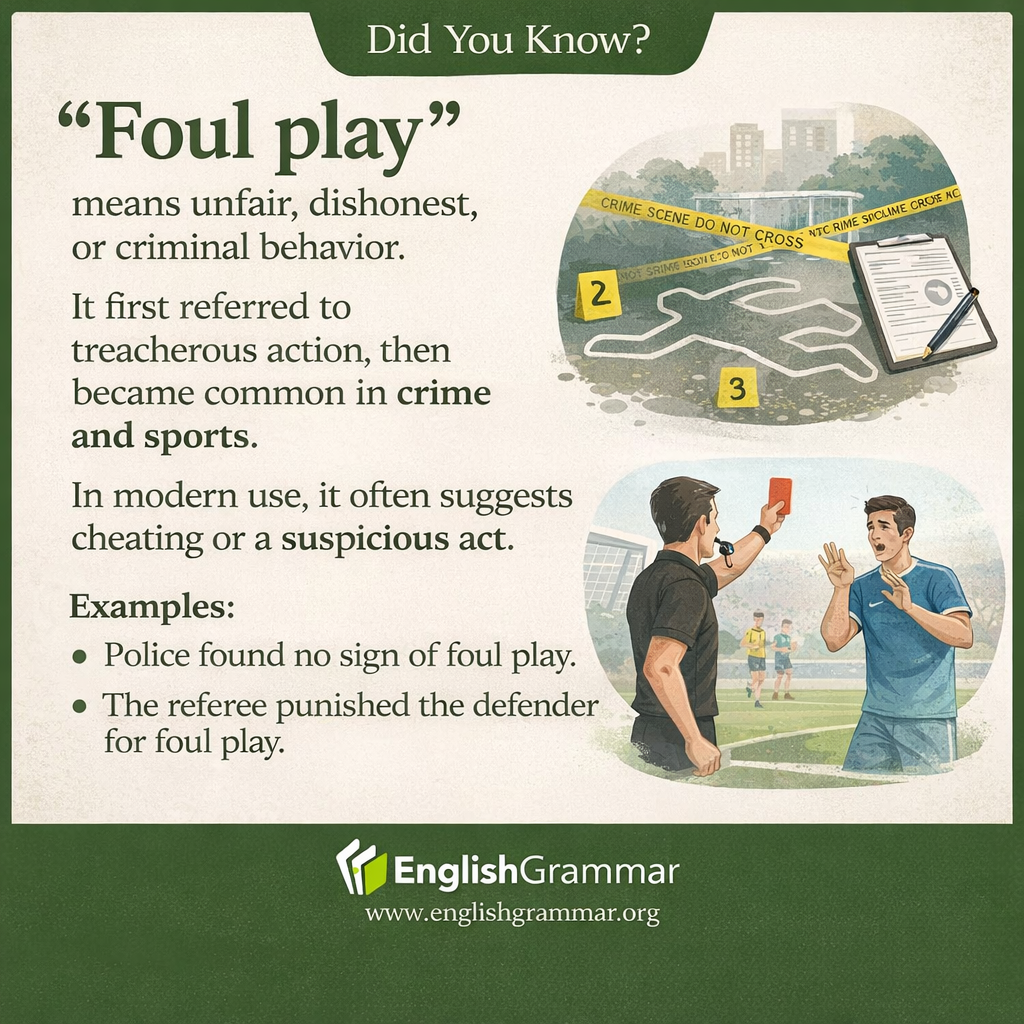
“Foul play” usually means unfair, dishonest, or criminal behavior. Today, people often use it in two common ways. In sports, it means breaking the rules unfairly. In crime reporting, it means a suspicious act, especially one that may have caused harm or death.
The phrase is old. Foul has long meant dirty, wicked, or unfair, and play once had a broader sense of action or conduct. So the phrase originally pointed to treacherous or dishonorable behavior. That older idea still connects clearly to the modern meaning.
- Sports use: “The referee stopped the match for foul play.”
- Crime use: “Investigators said there was no evidence of foul play.”
Notice that the meaning depends on context. In a game, it usually refers to rule breaking. In news reports, it usually suggests that an injury, disappearance, or death may not have been accidental.
This is why the phrase feels stronger than words like mistake or accident. It points to intention, dishonesty, or serious suspicion.