
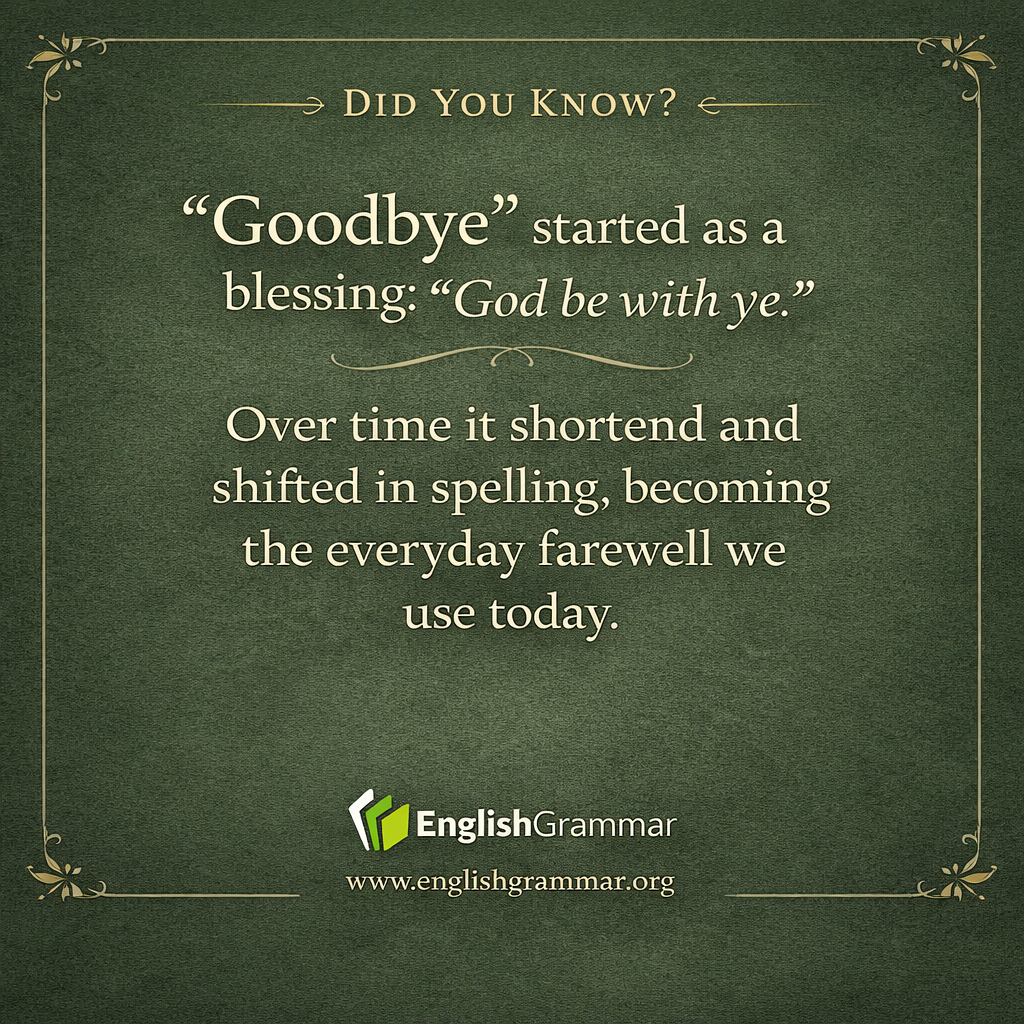
Goodbye feels like a plain, neutral farewell today, but it began as a much more specific phrase: God be with ye. In earlier English, people often used longer parting wishes and blessings. Over time, frequent expressions tend to get said faster, shortened, and reshaped into new forms.
As God be with ye was repeated, it contracted in pronunciation and writing into forms like God b’wye and eventually goodbye. The modern spelling can make it look related to good, but historically it is tied to that older blessing, not a comment that your goodbye is “good.”
This is a classic example of language change: common phrases can fuse into a single word when speakers treat them as one unit.
- Older style: “God be with ye till we meet again.”
- Modern style: “Goodbye, I will call you tomorrow.”
- Contrast: “Good night” is still two words, but “goodbye” became one because it came from a different original phrase.
Knowing the history can also explain why goodbye does not need to sound religious now. Many words keep their old roots even after their everyday meaning shifts.
