
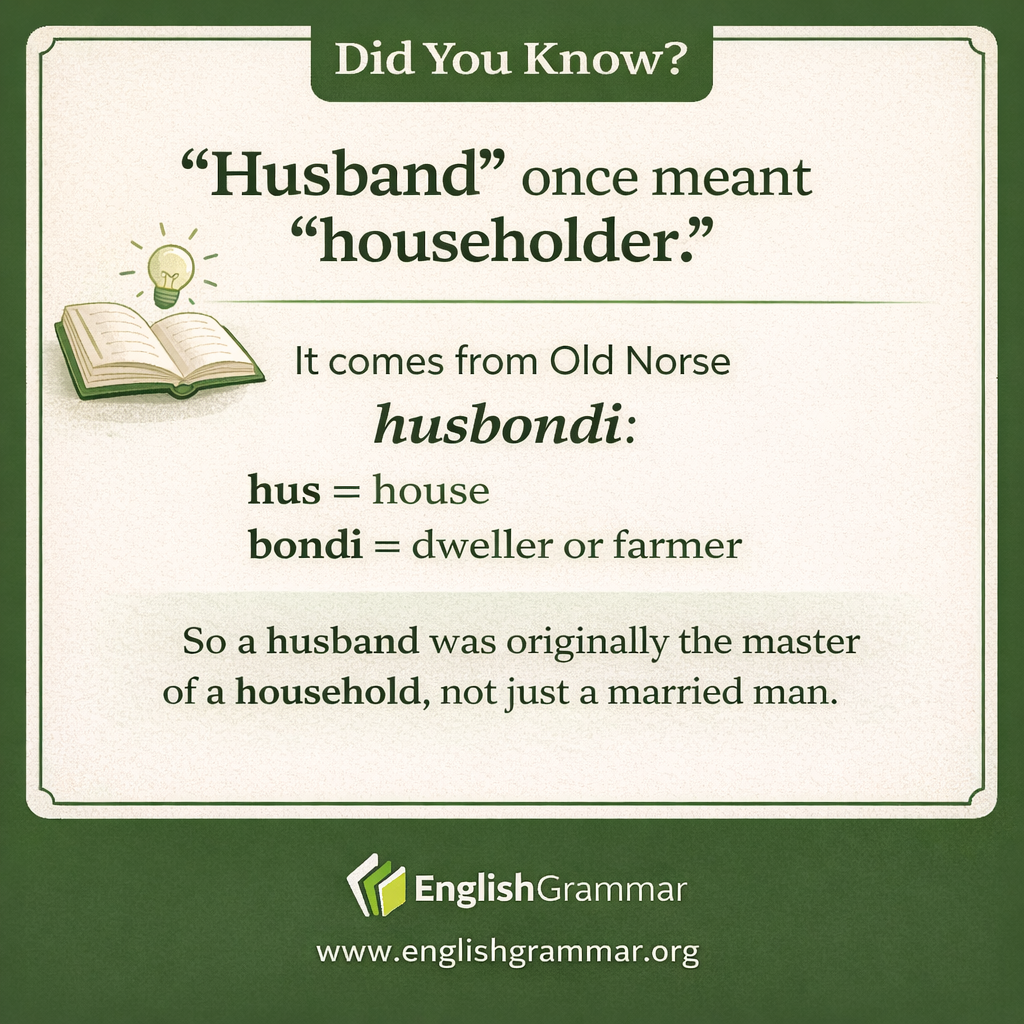
The word husband did not originally mean only a married man. In earlier English, it referred more broadly to a householder, someone who managed a home, land, or household affairs.
This meaning came through Old Norse husbondi. The first part, hus, meant house. The second part, bondi, referred to a dweller, farmer, or household manager. Put together, the word described a man connected with running a household.
Over time, the meaning narrowed. Because the male head of a household was often also a married man, husband gradually became the usual word for a wife’s spouse.
You can still see traces of the older sense in related words and expressions:
- household keeps the same house idea.
- husbandry originally meant the management of a house or estate, and later farming.
- A medieval husbandman was a farmer, not simply a married man.
So the history of husband reflects a shift from person who keeps a house to married man, with the older household meaning coming first.
