
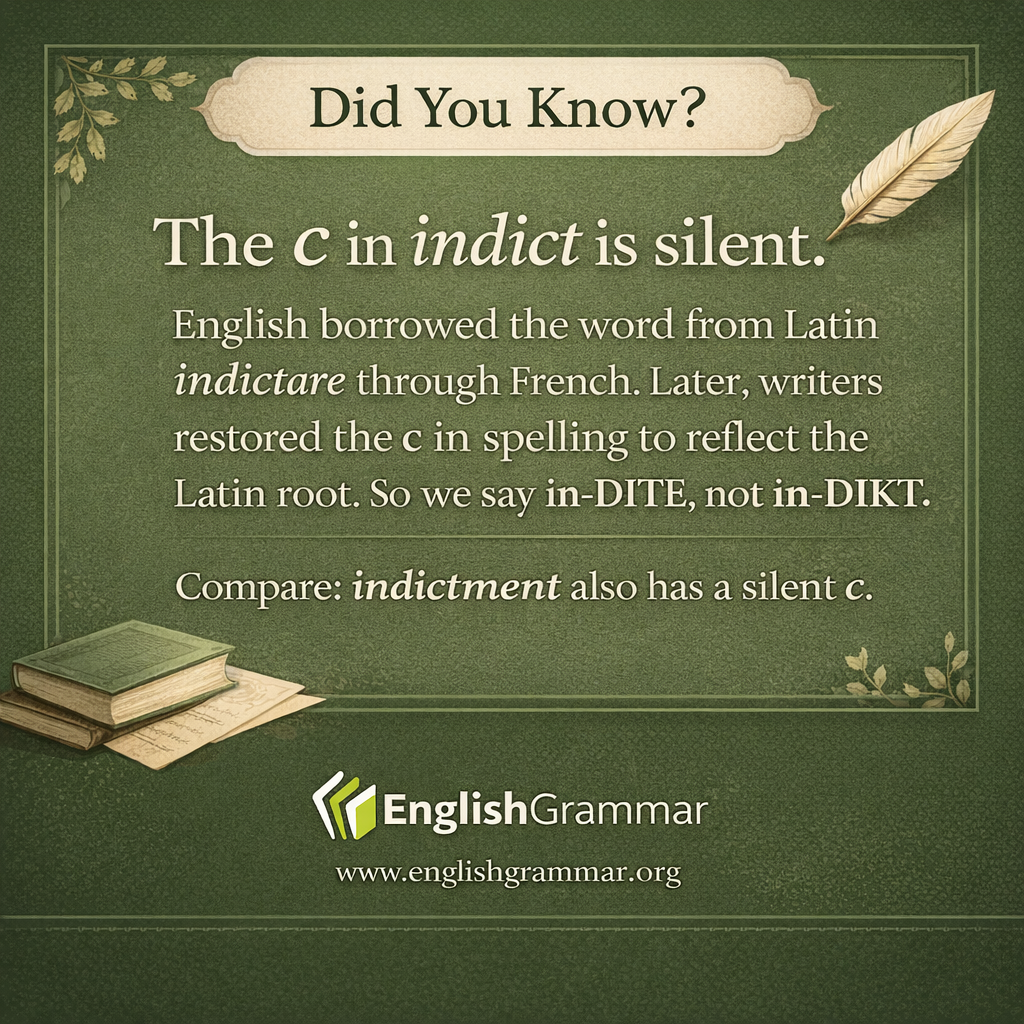
The c in indict is silent because of the word’s history. English borrowed the word through French, where the pronunciation had already lost the hard c sound. Later, scholars and scribes changed the spelling to look more like the Latin source, indictare. The pronunciation, however, did not change with the spelling.
That means the modern word keeps an older, simpler sound while showing a more learned spelling. So indict is pronounced in-DITE, not in-DIKT.
You can see the same pattern in related forms:
- indict: the court may indict a suspect
- indictment: the indictment was filed yesterday
This is a common feature of English. Sometimes spelling is adjusted to reflect a word’s ancestry, even when everyday speech has already moved in a different direction. In indict, the silent c is a reminder of the Latin root, not a clue to modern pronunciation.