
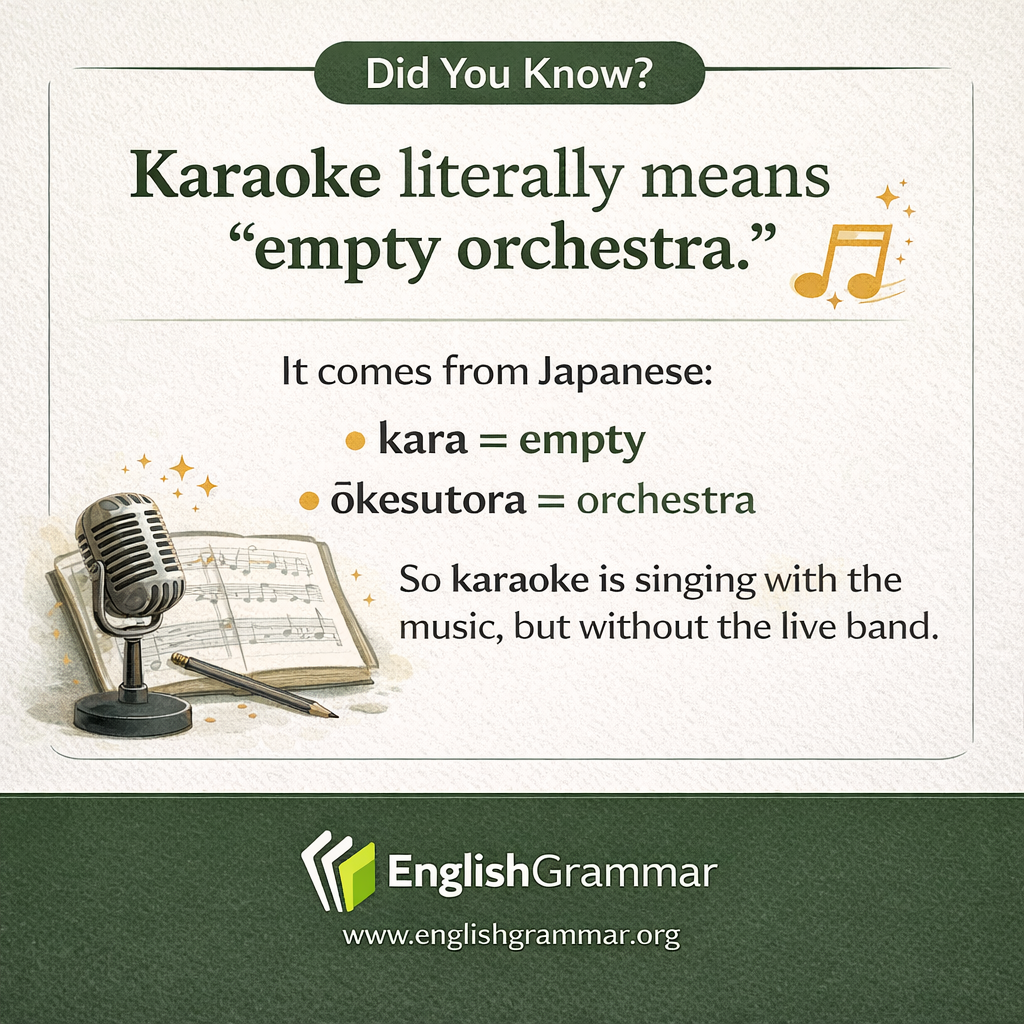
Karaoke is borrowed from Japanese, and its literal meaning is empty orchestra. The word combines kara, meaning empty, with ōkesutora, a Japanese form of the English word orchestra.
The name makes sense when you think about how karaoke works. You sing the vocal part yourself, while the instrumental music is already provided. In other words, the orchestra is there in sound, but it is empty of a live lead singer, or of live performers altogether.
For example, in a karaoke room or bar, the song’s backing track plays through speakers, and the lyrics appear on a screen. The person holding the microphone becomes the singer for that performance.
- kara: empty
- ōkesutora: orchestra
- karaoke: singing along with recorded accompaniment
This is a good example of how borrowed words can keep clear meanings from their original language. Even if many people use karaoke without thinking about its parts, the literal meaning still neatly describes the activity.
