
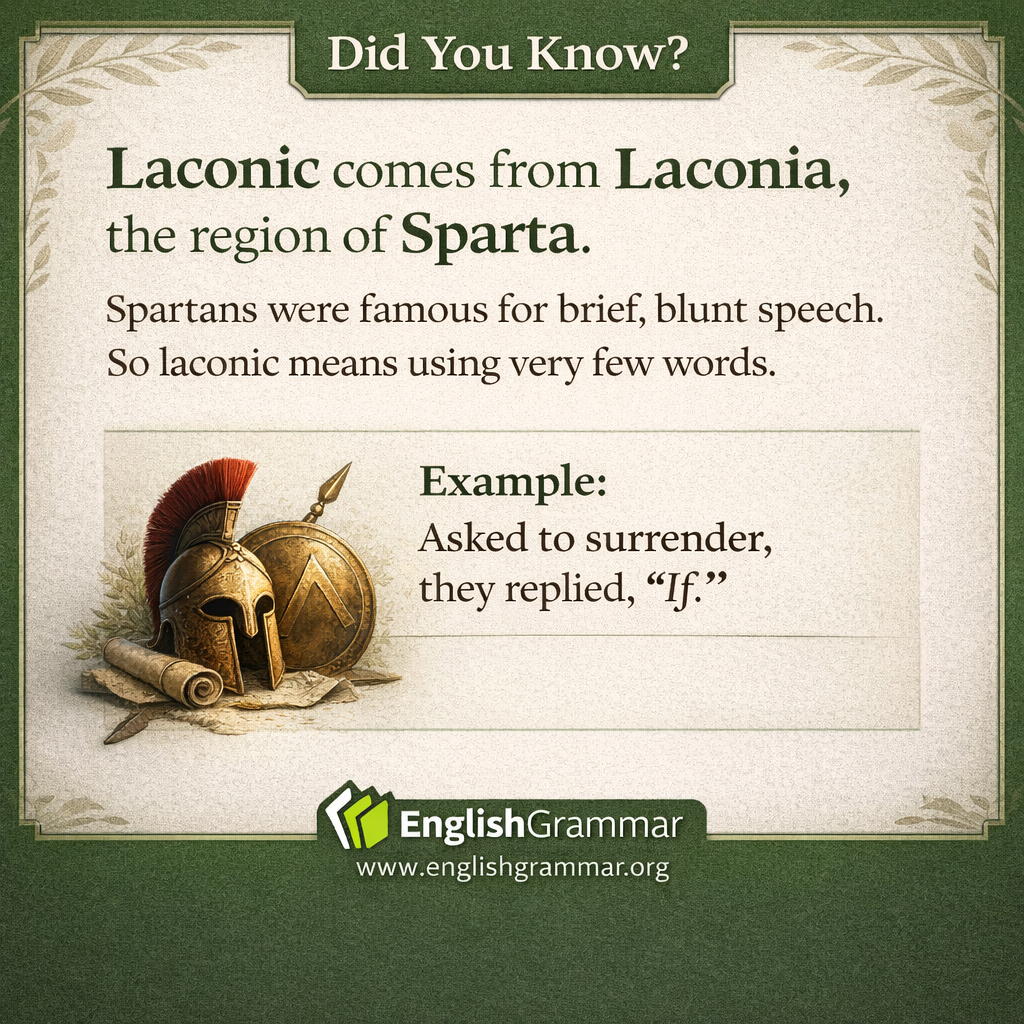
Laconic comes from Laconia, the region of ancient Greece where Sparta was located. In Greek and later in English, the word became associated with the Spartan reputation for speaking briefly and directly.
That history explains the modern meaning of laconic: using very few words. It often suggests speech that is concise, restrained, and sometimes a little blunt.
A famous example is the Spartan reply “If”. According to tradition, when an enemy threatened, “If I invade Laconia, I shall drive you out,” the Spartans answered with that single word. Whether every story about Spartan speech is perfectly historical or not, the association between Sparta and brevity became strong enough to shape the word.
- Laconic: brief and spare. Example: “Her answer was laconic.”
- Not exactly the same as rude: a laconic reply can be calm and efficient, not impolite.
- Not the same as silent: it means using few words, not saying nothing.
So when someone is described as laconic, the word carries a small piece of Spartan history with it.
