
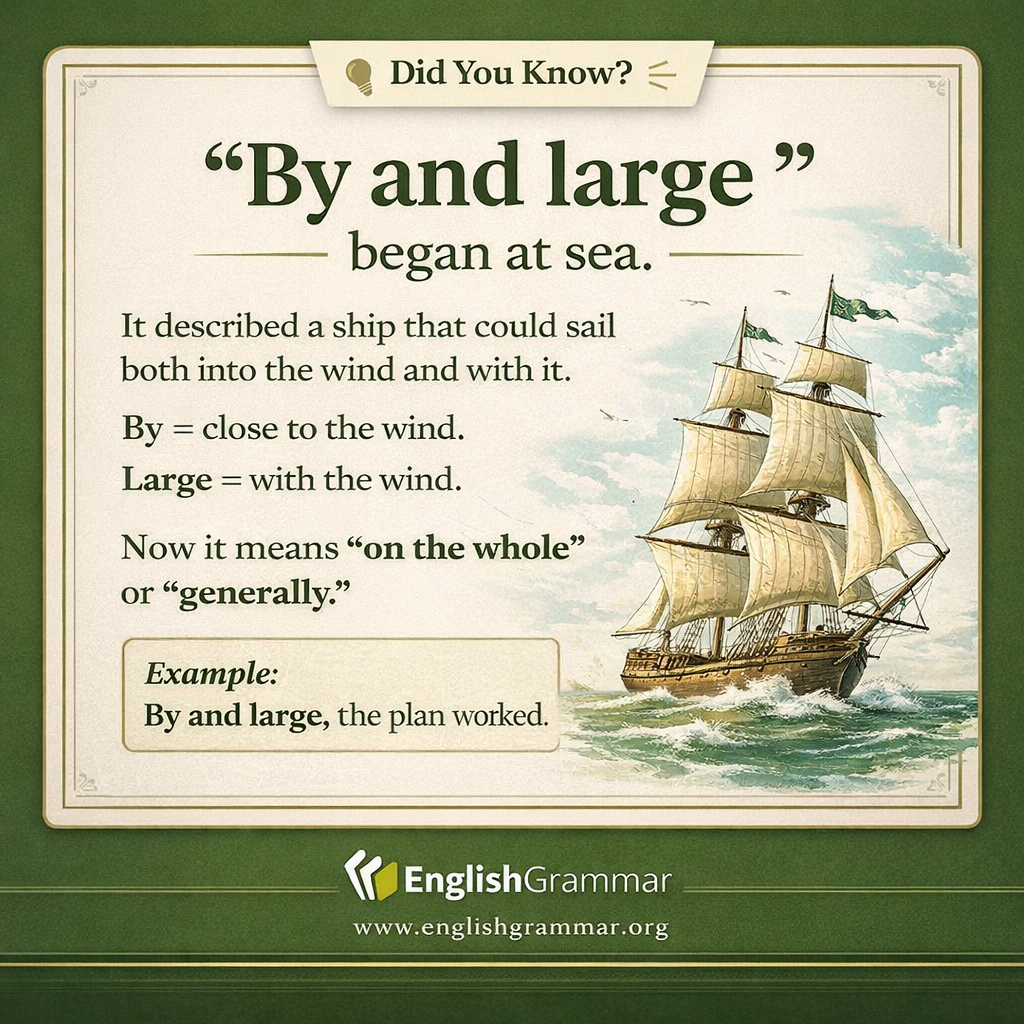
By and large began as a nautical expression. It referred to a ship that could sail by, meaning close to the wind, and large, meaning with the wind behind it. A vessel that could manage both conditions was versatile.
Over time, the phrase moved into general English. Now by and large usually means on the whole, generally, or taking everything together.
For example: By and large, the meeting went well. In that sentence, the speaker is giving an overall judgment, not describing sailing.
- Original sense: a ship could sail close to the wind and also with it.
- Modern sense: an overall summary or general conclusion.
This kind of history is common in English. A technical phrase starts in a specific field, then becomes everyday language after speakers keep the useful general idea.
