
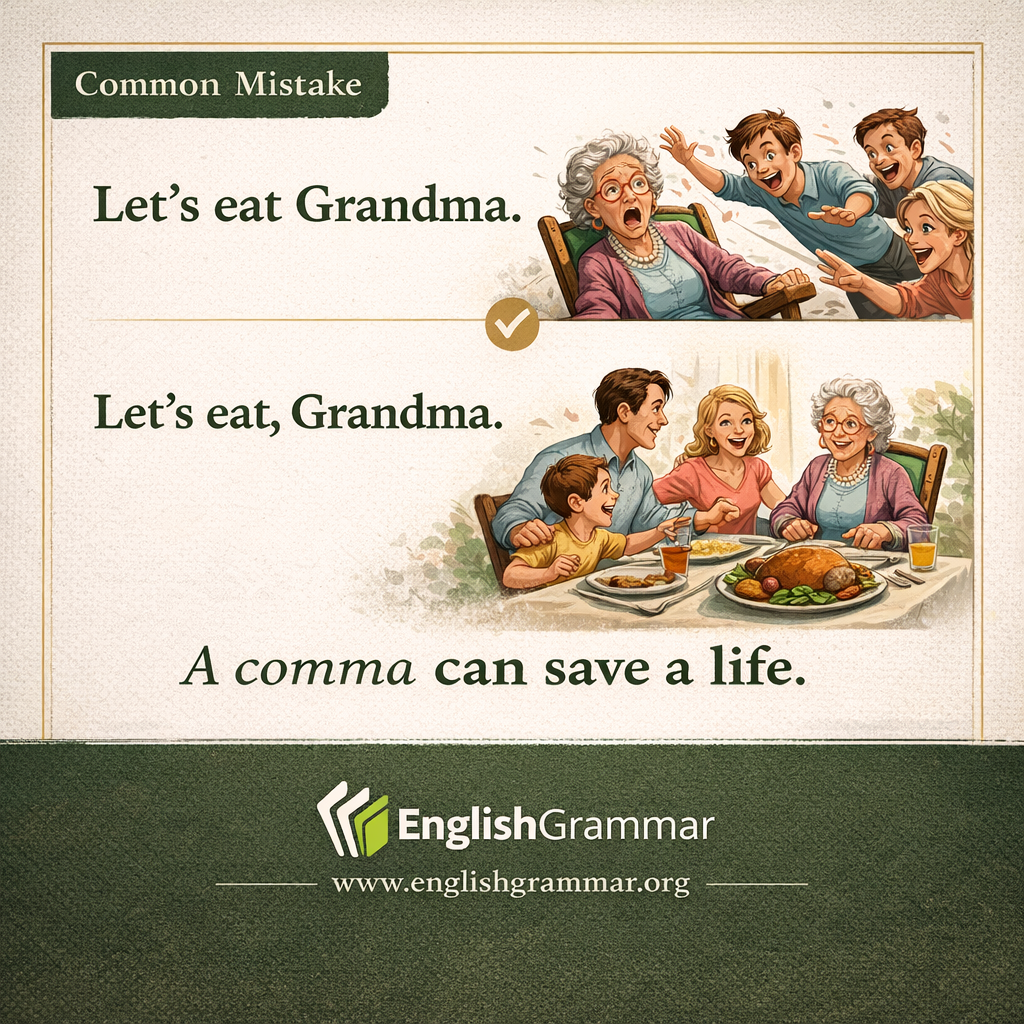
The difference between “Let’s eat Grandma” and “Let’s eat, Grandma” is a single comma, but the meaning changes completely.
In “Let’s eat, Grandma”, Grandma is the person being addressed. This is called direct address, and English usually separates it with a comma. The sentence means you are speaking to Grandma and suggesting that both of you eat.
In “Let’s eat Grandma”, there is no comma, so Grandma becomes the object of eat. That creates a very different, and unintentionally funny, meaning.
This mistake happens because writers often skip commas in short, casual sentences. But commas are important when you name the person you are talking to.
- Correct: “Thanks, Maya.”
- Correct: “Can we go, Dad?”
- Wrong meaning: “Can we go Dad?”
To avoid this error, check whether a name is being spoken to directly. If it is, add a comma before, after, or around the name as needed.
Small punctuation marks can do big jobs. In this case, the comma makes your meaning clear and keeps Grandma safely at the table.
