
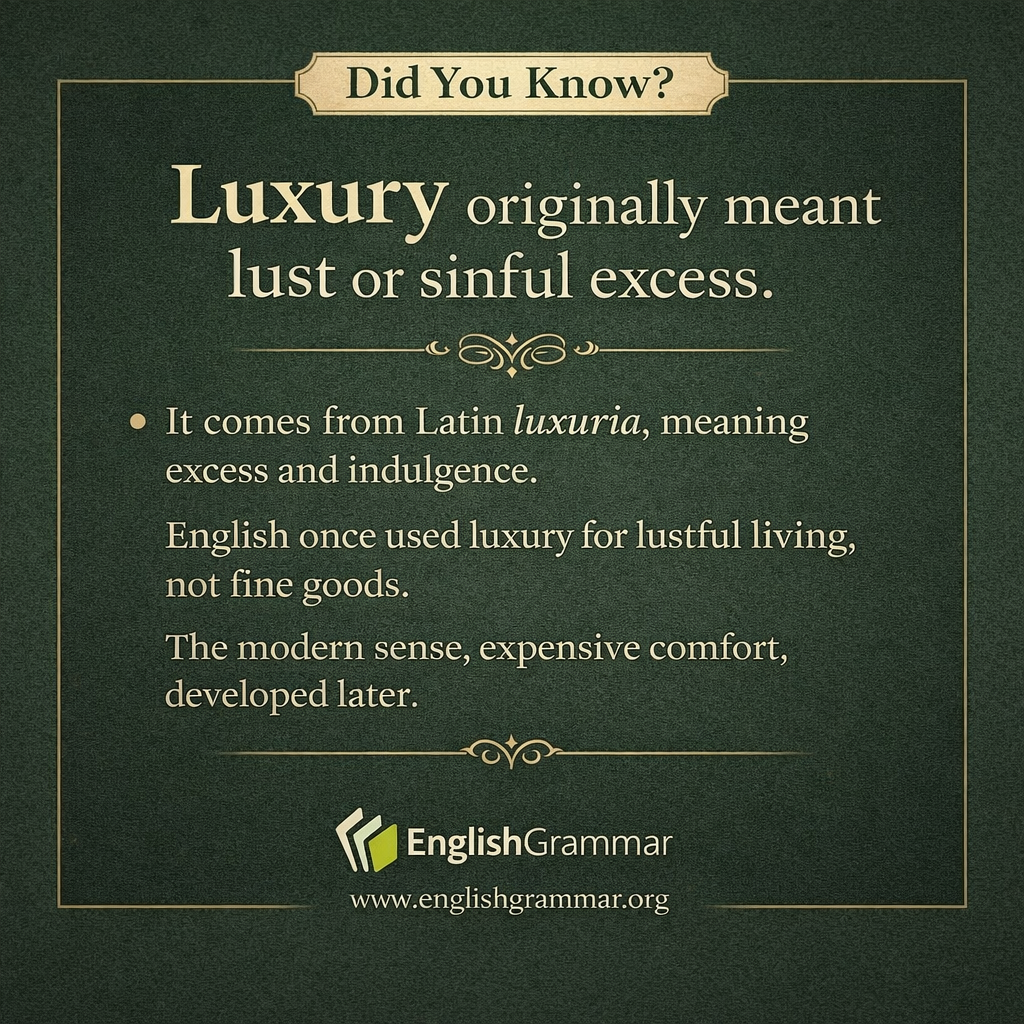
Luxury did not originally mean expensive comfort, fine hotels, or premium products. In earlier English, it referred to lust, excess, and self indulgence. The word comes from Latin luxuria, which meant abundance, extravagance, and overgrowth, and it often carried a negative moral sense.
That older meaning shaped early English use. A writer could use luxury to describe sensual indulgence or morally excessive living, not a silk robe or a first class seat. In other words, the word once criticized behavior more than it described objects.
Over time, the meaning shifted. By the modern period, luxury increasingly referred to things that provide comfort, pleasure, and expense. Today, if someone says a watch or vacation is a luxury, they usually mean it is costly and nonessential, not lustful.
- Older sense: luxury as lust, indulgence, excess
- Modern sense: luxury as comfort, refinement, expensive pleasure
- Example contrast: a medieval writer might condemn luxury in conduct, while a modern ad might praise luxury in a car
This is a good reminder that word meanings can shift a lot over time, especially when moral judgments fade and everyday commercial use grows stronger.