
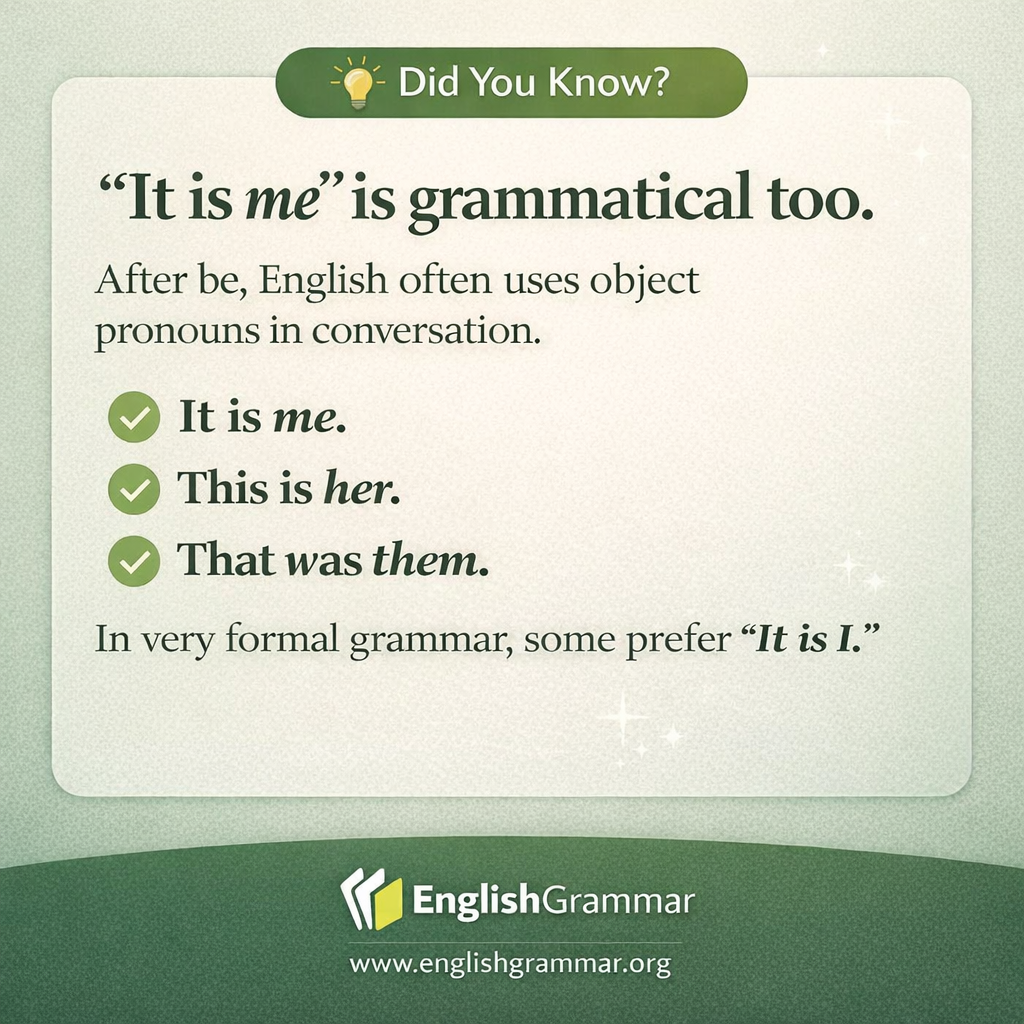
“It is me” is grammatical in modern English. In everyday speech and writing, English commonly uses object pronouns after the verb be, especially in short identifying sentences.
That is why these all sound natural to most speakers:
- It is me.
- This is her.
- That was them.
Traditional school grammar sometimes prefers “It is I” because the pronoun is said to refer back to the subject. That rule was influenced by older grammatical traditions, including Latin. But modern English does not always follow that pattern in actual usage.
Today, “It is I” can sound very formal, old fashioned, or deliberately stiff in ordinary conversation. You may still see it in very formal writing, in set phrases, or when someone wants a formal tone.
A useful way to think about it is this:
- For normal conversation, “It is me” is natural and standard.
- For very formal style, “It is I” may be chosen.
So if someone says “Who is there?”, the answer “It is me” is completely correct in everyday English.
