
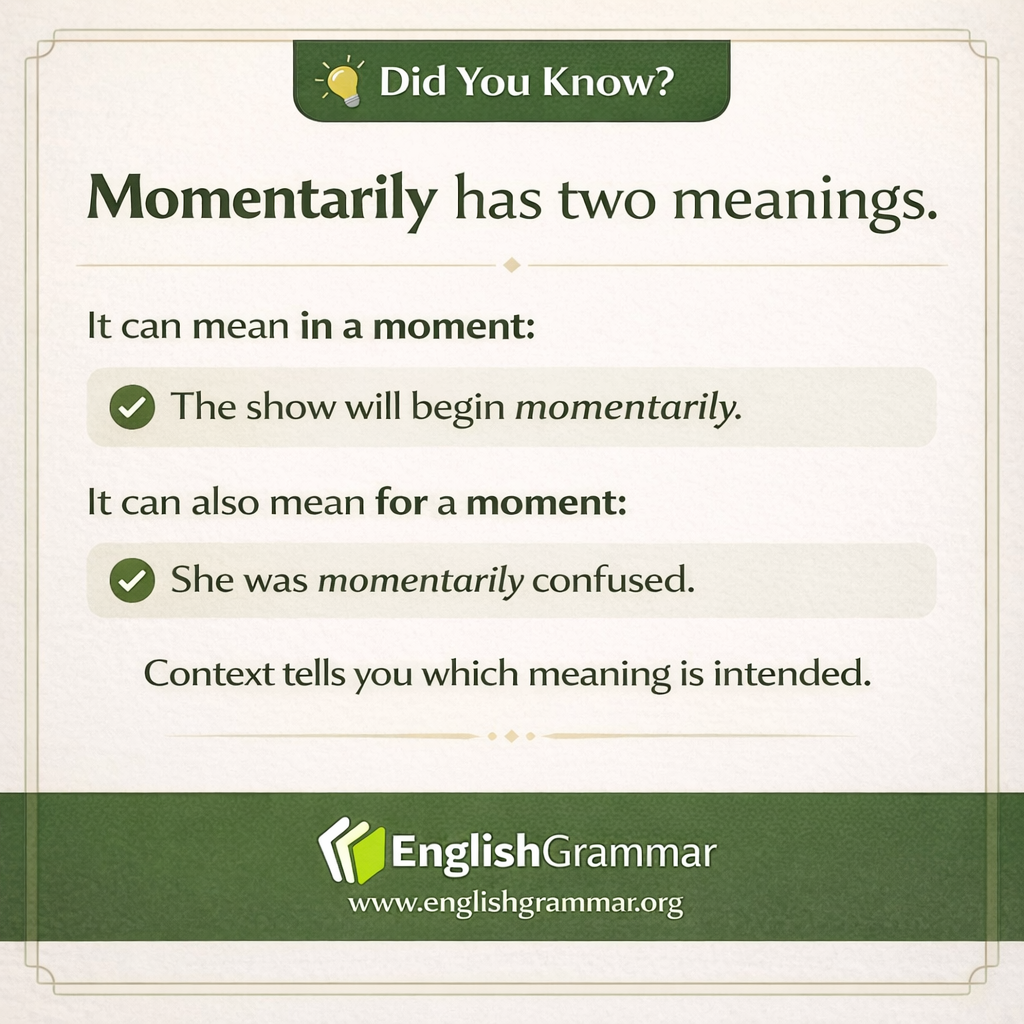
Momentarily has two standard meanings in English, and both are widely used.
- In a moment, meaning soon: “The train will depart momentarily.”
- For a moment, meaning briefly: “He was momentarily distracted.”
Some speakers notice only one of these meanings and may feel surprised by the other, but both are accepted in modern usage. In everyday reading and listening, the surrounding words usually make the meaning obvious.
For example, “The doctor will be with you momentarily” means the doctor will arrive soon. But “She momentarily forgot his name” means she forgot it for a brief time.
If you are unsure, look at the verb and situation. Announcements often use momentarily to mean soon, while descriptions of thoughts, feelings, or actions often use it to mean briefly.