
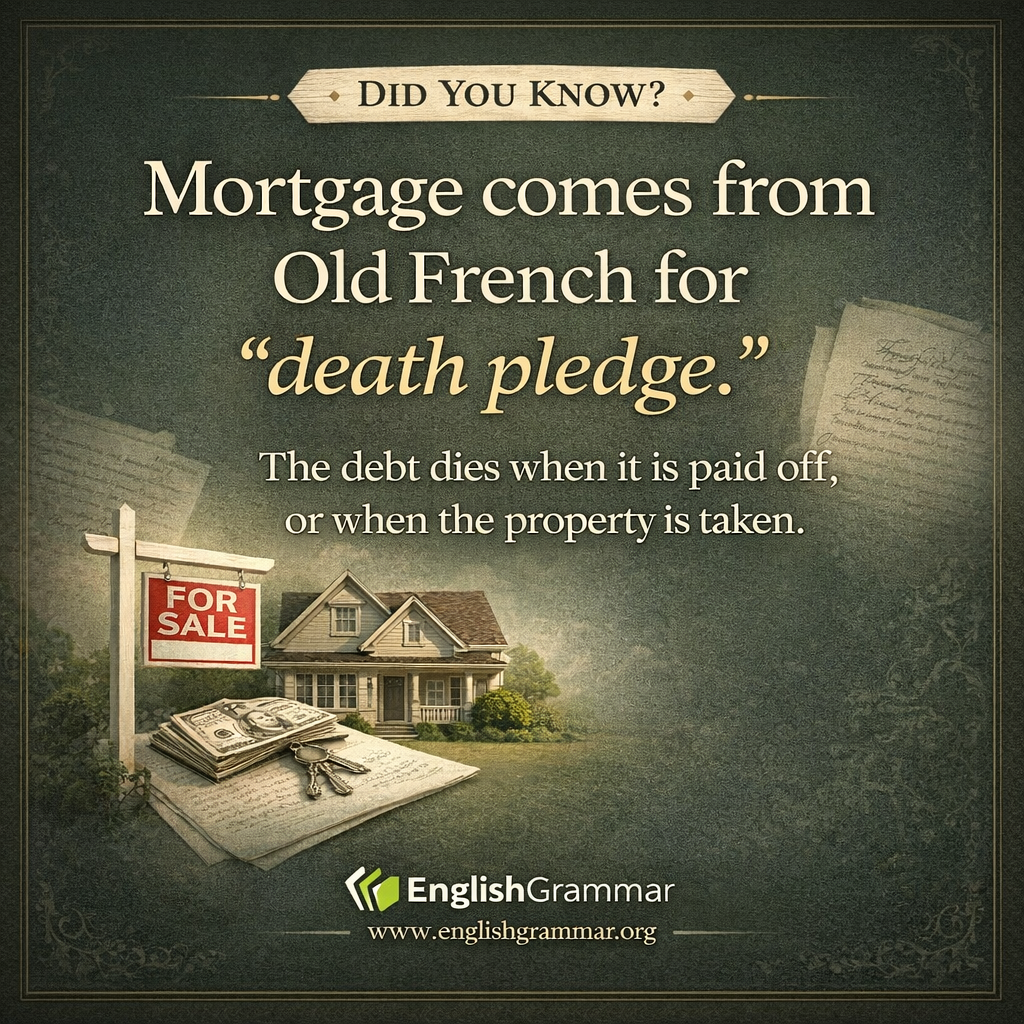
The word mortgage has surprisingly grim roots. It comes from Old French: mort meant “dead,” and gage meant “pledge.” Put together, the term meant “death pledge.”
Why such a dramatic name? In medieval legal use, the pledge became “dead” in one of two ways. The debt ended when the borrower fully repaid the loan, or the lender took the property because the borrower failed to pay. In either case, the pledge was finished.
That does not mean the word was originally about death in a literal sense. It was about an agreement that came to an end under specific conditions. Over time, mortgage became the standard word for a home loan, even though most speakers never notice its older meaning.
Here is a simple contrast:
- Modern use: “They applied for a mortgage to buy their first house.”
- Older sense explained: the pledge “died” when the loan was repaid or the home was forfeited.
So the next time you hear mortgage, you are hearing a small piece of legal and language history still alive in everyday English.
