
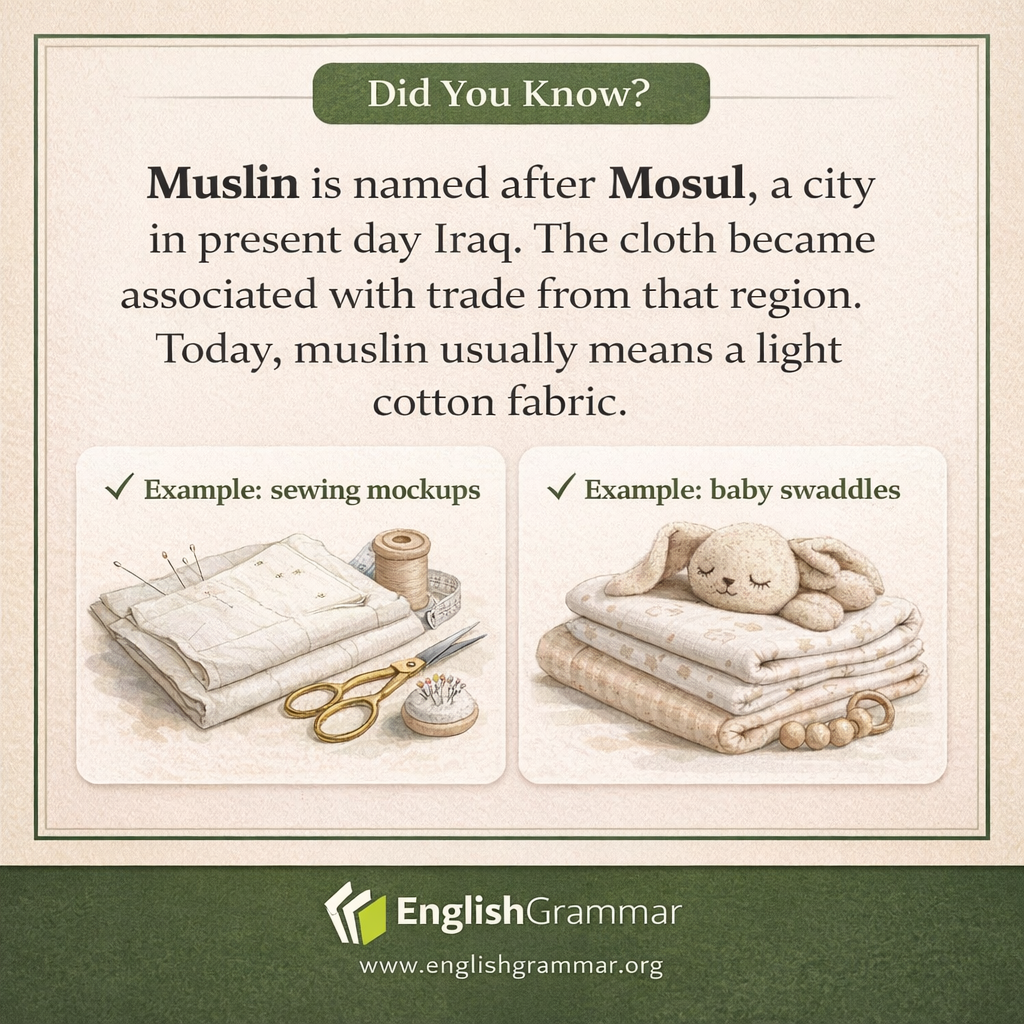
Muslin is traditionally linked to Mosul, a historic city in present day Iraq. In English, the fabric name came to be associated with cloth traded through or connected with that region.
Over time, the meaning broadened. Today, many people use muslin to mean a plain, lightweight cotton fabric, even when it has no direct connection to Mosul. That shift is common in language: a word can begin as a place based name and later become a general label.
A few modern examples make this clearer:
- Sewing: a muslin can be a test version of a garment made before cutting the final fabric.
- Household use: muslin is often used for baby swaddles or lightweight cloths.
- Meaning shift: the modern fabric term is broader than its historical geographic link.
So the key idea is simple: the word points back to Mosul, but its everyday use has expanded far beyond that original connection.
