
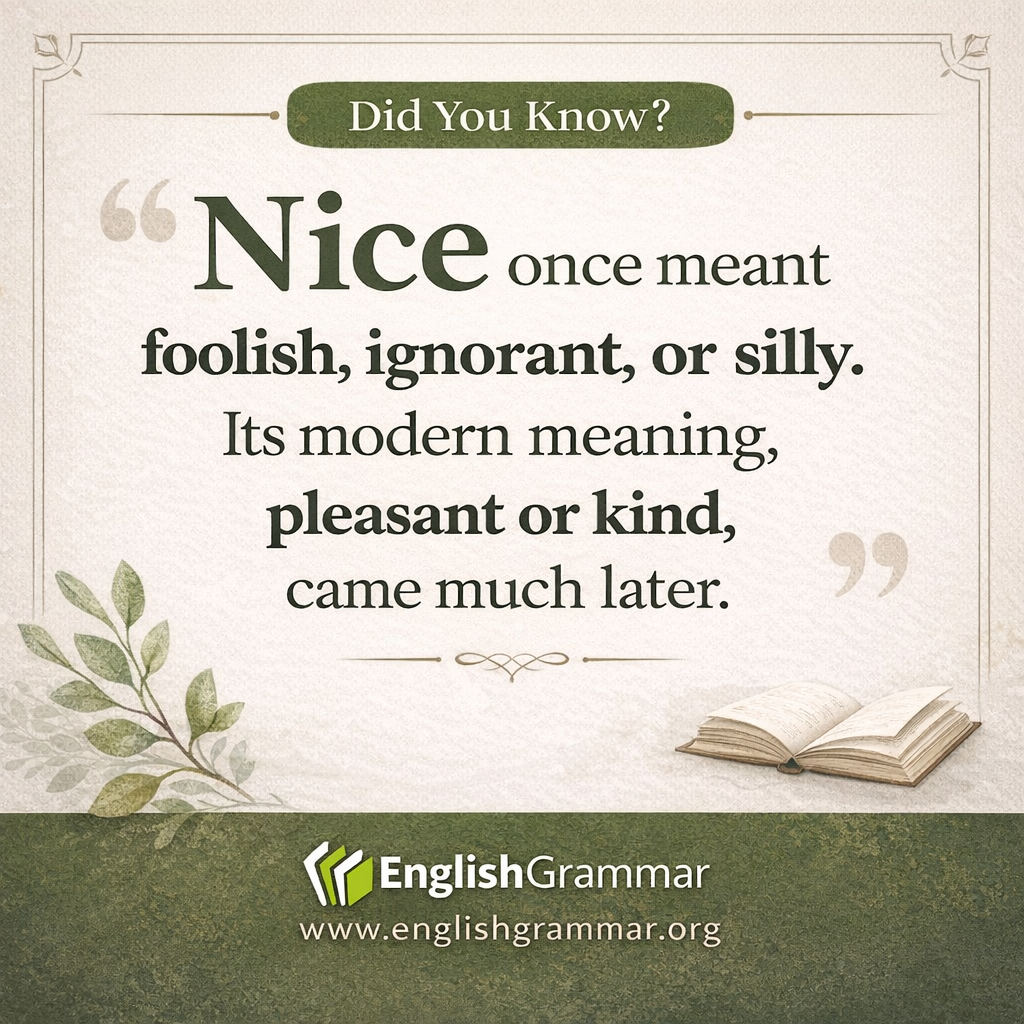
Nice has not always been a compliment. In earlier English, it often meant foolish, ignorant, or silly. That older sense came through French and ultimately from Latin, where the word had negative meanings connected to not knowing or lacking good judgment.
Over time, the meaning of nice shifted again and again. It was also used to mean precise or fussy before settling into the modern sense of pleasant, kind, or agreeable. This kind of change is common in language. Words often soften, narrow, or broaden as people use them in new contexts.
The contrast is striking:
- Older sense: He was thought too nice to manage his affairs, meaning foolish or lacking judgment.
- Modern sense: She gave us a nice welcome, meaning pleasant and kind.
So when you call someone nice today, you are using a word with a surprisingly rough past. Its history is a good reminder that word meanings are not fixed. They change with time, culture, and everyday use.
