
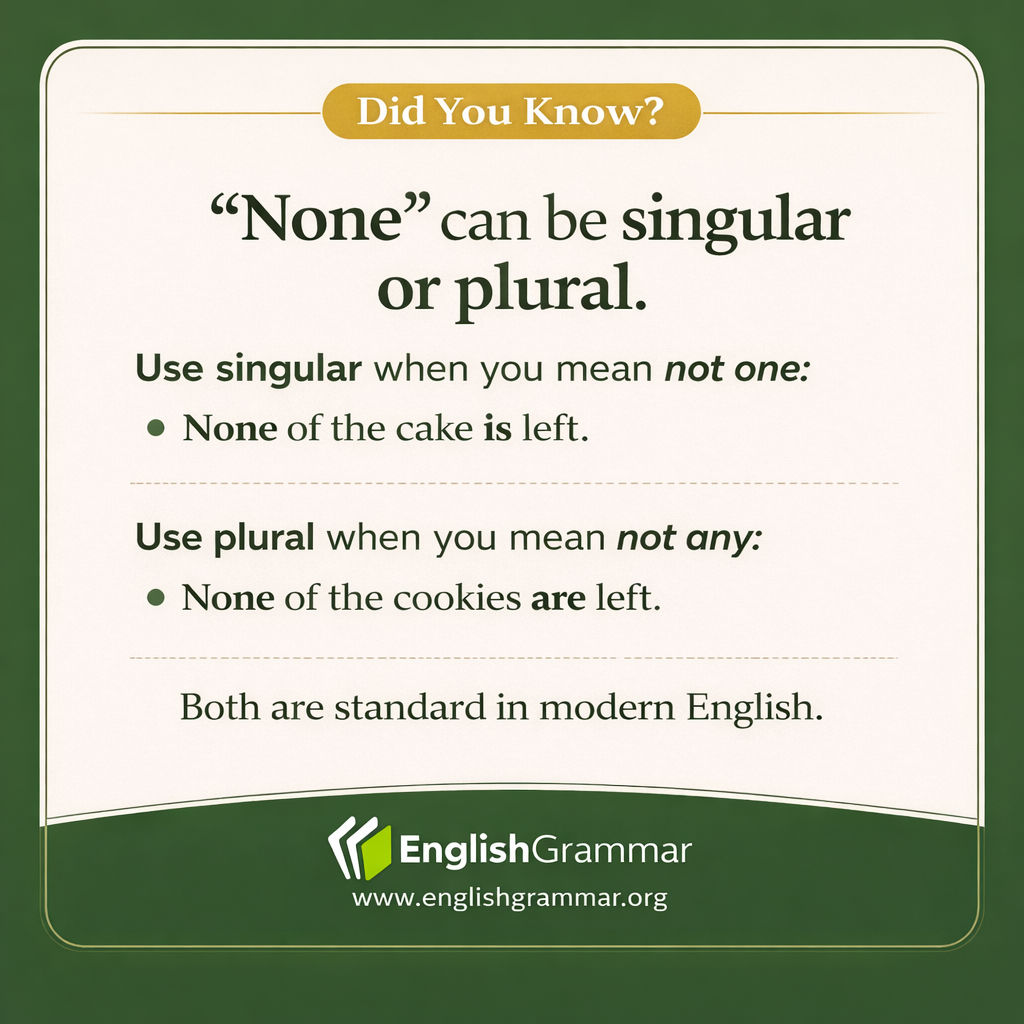
The word none can be either singular or plural in modern English. The choice usually depends on meaning, not on a rigid rule.
Use a singular verb when none means not one or not a single part. For example: None of the cake is left. Here, the idea is a single amount of cake.
Use a plural verb when none means not any of several people or things. For example: None of the cookies are left. Here, the idea is multiple cookies.
Both patterns are widely accepted:
- None of the water is clean.
- None of the students are ready.
If both sound possible, choose the verb that matches the meaning you want to emphasize. Think about whether you are talking about one whole amount or several separate items. That is why both None is and None are can be correct.
