
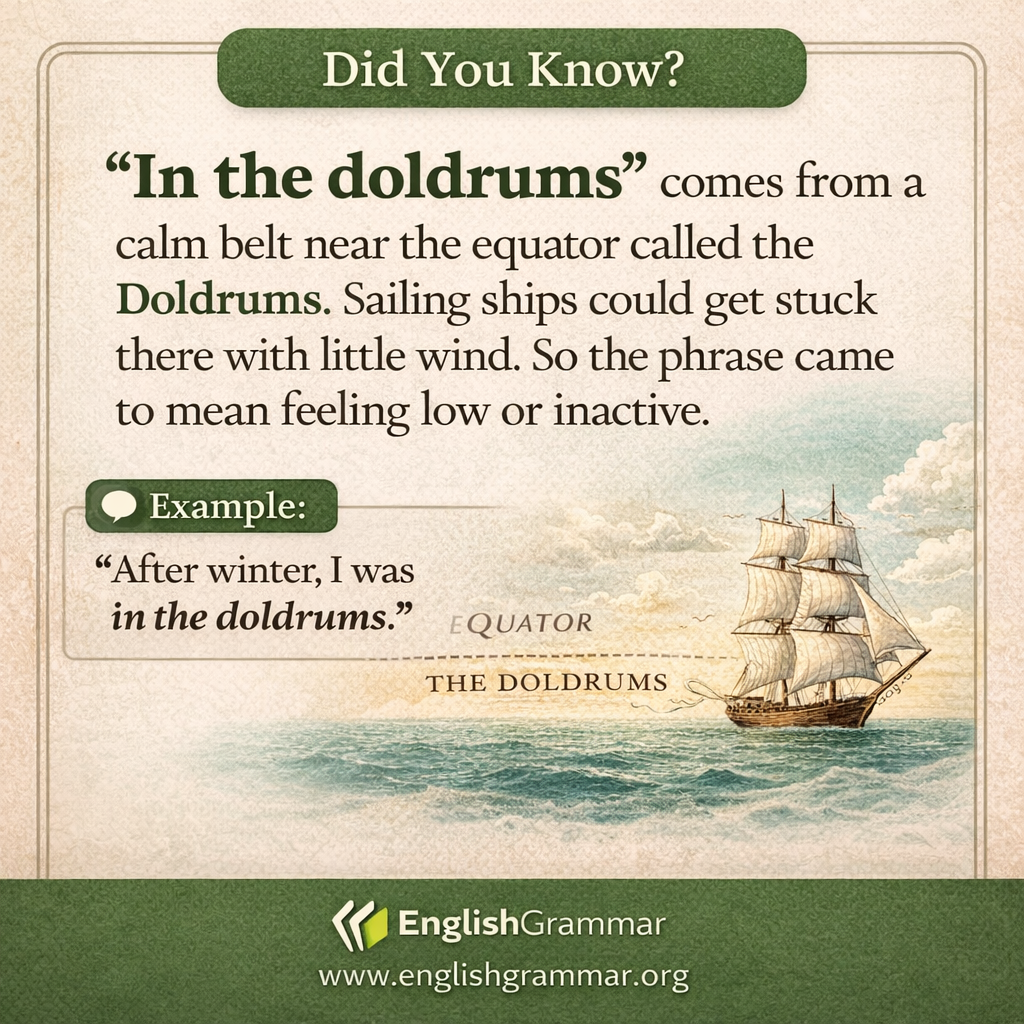
The phrase “in the doldrums” comes from the language of sailing. The Doldrums is the common name for a calm area near the equator, now often called the Intertropical Convergence Zone. In that region, winds can be weak or changeable, which made travel difficult for sailing ships.
For sailors, being in the Doldrums could mean being stuck for days with little movement. That physical image shaped the modern figurative meaning. Today, if someone is in the doldrums, they may feel low in mood, unmotivated, or simply inactive.
For example, you might say, “The team has been in the doldrums since its best player left.” You could also say, “I was in the doldrums for weeks after finishing the project.” In both cases, the idea is the same: a lack of energy, progress, or spirit.
- Original sense: a calm equatorial zone with little wind
- Figurative sense: a period of low spirits or low activity
- Core image: being unable to move forward easily
That is why the phrase still feels so vivid. It suggests not just sadness, but a frustrating sense of being stuck.
