
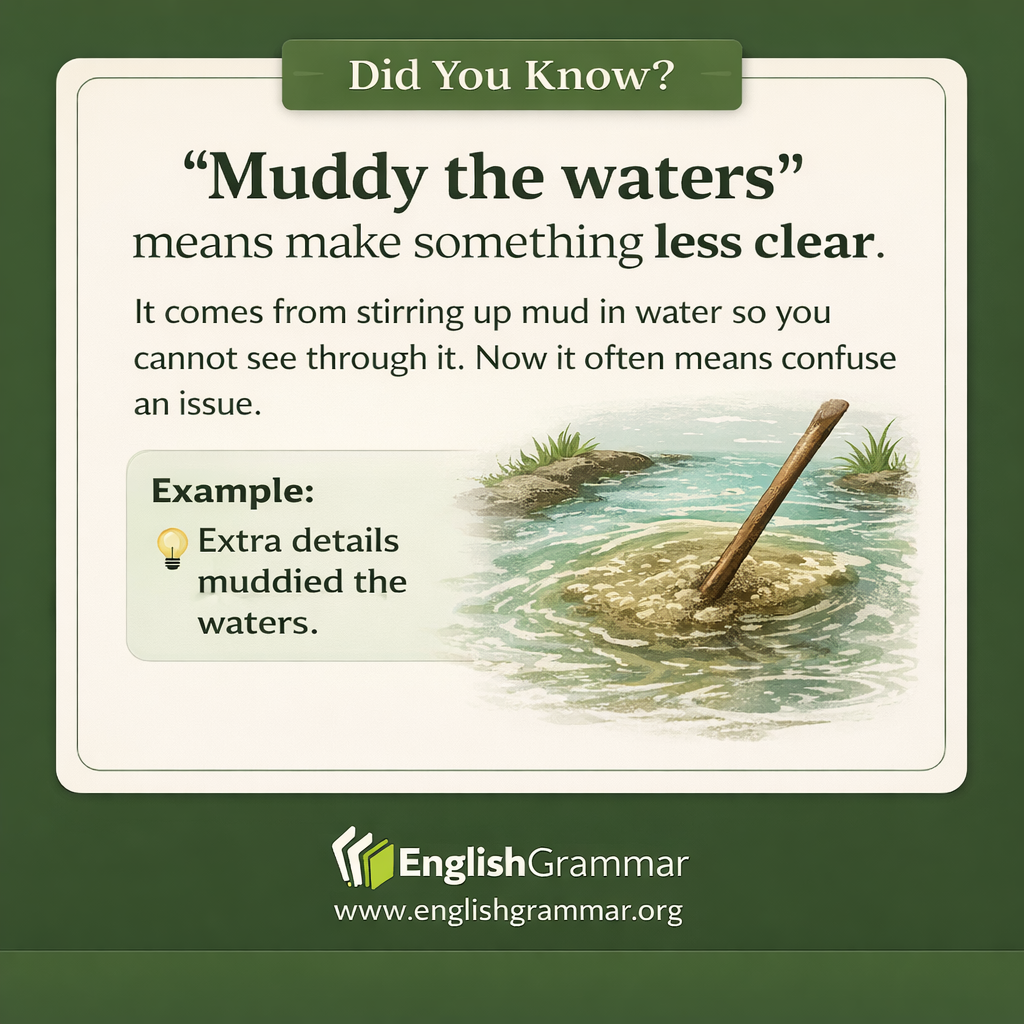
The idiom “muddy the waters” began with a simple physical image. If mud is stirred up in water, the water becomes cloudy and hard to see through. That loss of visibility led naturally to a figurative meaning: making a situation, argument, or discussion less clear.
Today, people usually use the phrase when someone adds confusion to an issue. It often suggests that the extra information is distracting, misleading, or unnecessary rather than helpful.
For example, you might say, “The witness gave a clear answer, but the lawyer’s extra comments muddied the waters.” In that sentence, the problem is not literal water. The issue is that clarity was reduced.
You can also use it in everyday situations:
- In debate: “He muddied the waters by changing the topic.”
- At work: “Too many last minute edits muddied the waters.”
- In news or politics: “Conflicting claims muddied the waters.”
A close idea is confuse the issue. The image in “muddy the waters”, however, is more vivid because it suggests that something once clearer has been stirred up and made harder to see.
