
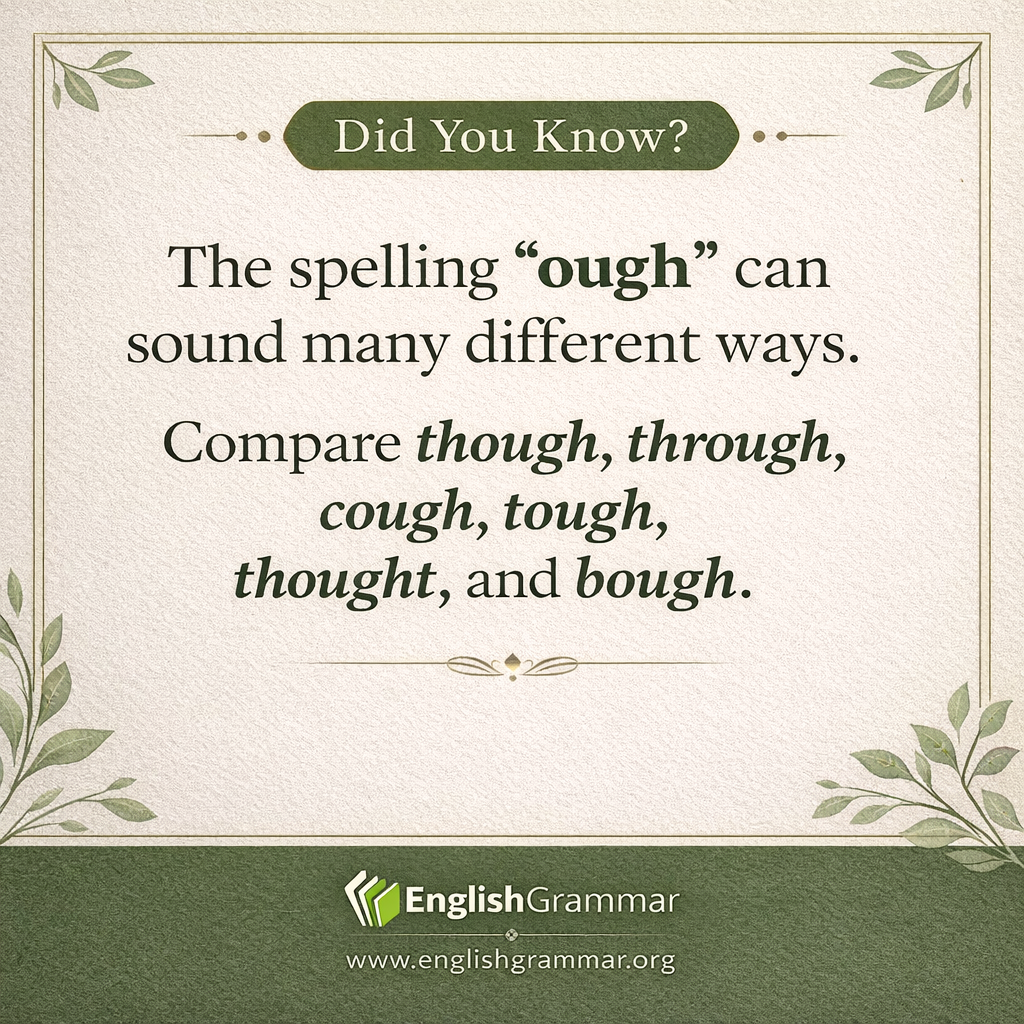
The letter group “ough” looks like it should have one reliable sound, but English does not work that way. In many words, the spelling stayed largely the same while pronunciation shifted over centuries. Different dialects, borrowed words, and sound changes all helped create today’s mix.
That is why the same letters can represent several sounds. For example:
- though sounds like thoh (a long “o” sound)
- through sounds like throo (an “oo” sound)
- cough sounds like koff (an “off” sound)
- tough sounds like tuff (an “uh” sound)
- thought sounds like thawt (an “aw” sound, in many accents)
- bough often sounds like bow (rhymes with “cow”)
These differences can be frustrating, but they also show English history in action. The spelling reflects older pronunciations, while modern speech reflects later changes that did not happen the same way in every word.
Example sentence: Though the branch was rough, I pushed through and coughed once. Notice how each “ough” chunk is pronounced differently, even in one short line.
