
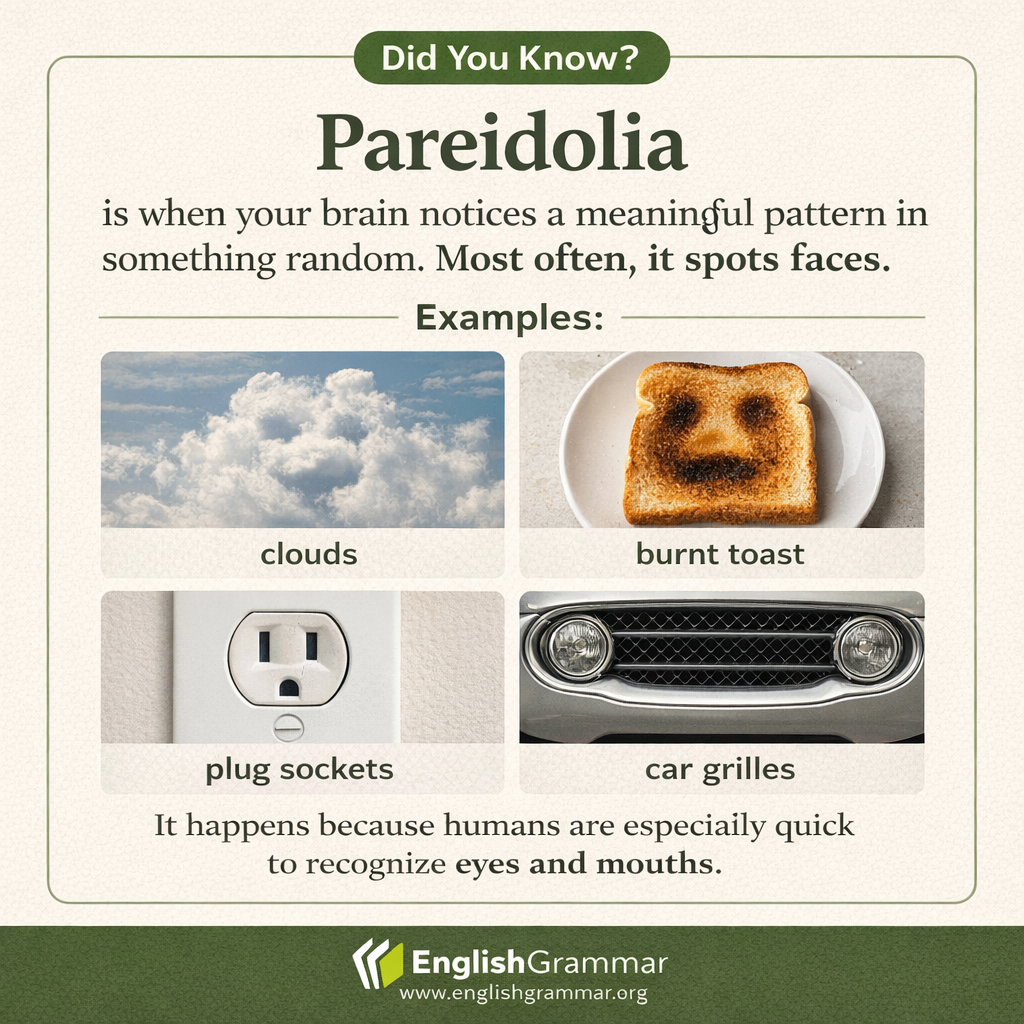
Pareidolia is the tendency to notice a meaningful image in something random or vague. The most common version is seeing a face where there is no real face at all.
This happens because the human brain is built to recognize faces very quickly. Spotting eyes, a mouth, and a simple arrangement of features is so important for social life that the brain often prefers a false alarm over missing a possible face. That is why two dots and a line can be enough.
Common examples include clouds that seem to have expressions, burnt toast that looks like a person, and plug sockets that appear surprised or sleepy. Car grilles and headlights can also look happy, angry, or serious.
- Clouds: random shapes can resemble eyes and a mouth.
- Toast: darker patches can look like facial features.
- Plug sockets: holes and switches can form a face like pattern.
Pareidolia is normal and very common. It is not usually a sign that something is wrong. It is simply the brain doing what it does best, searching for familiar patterns as fast as possible.
