
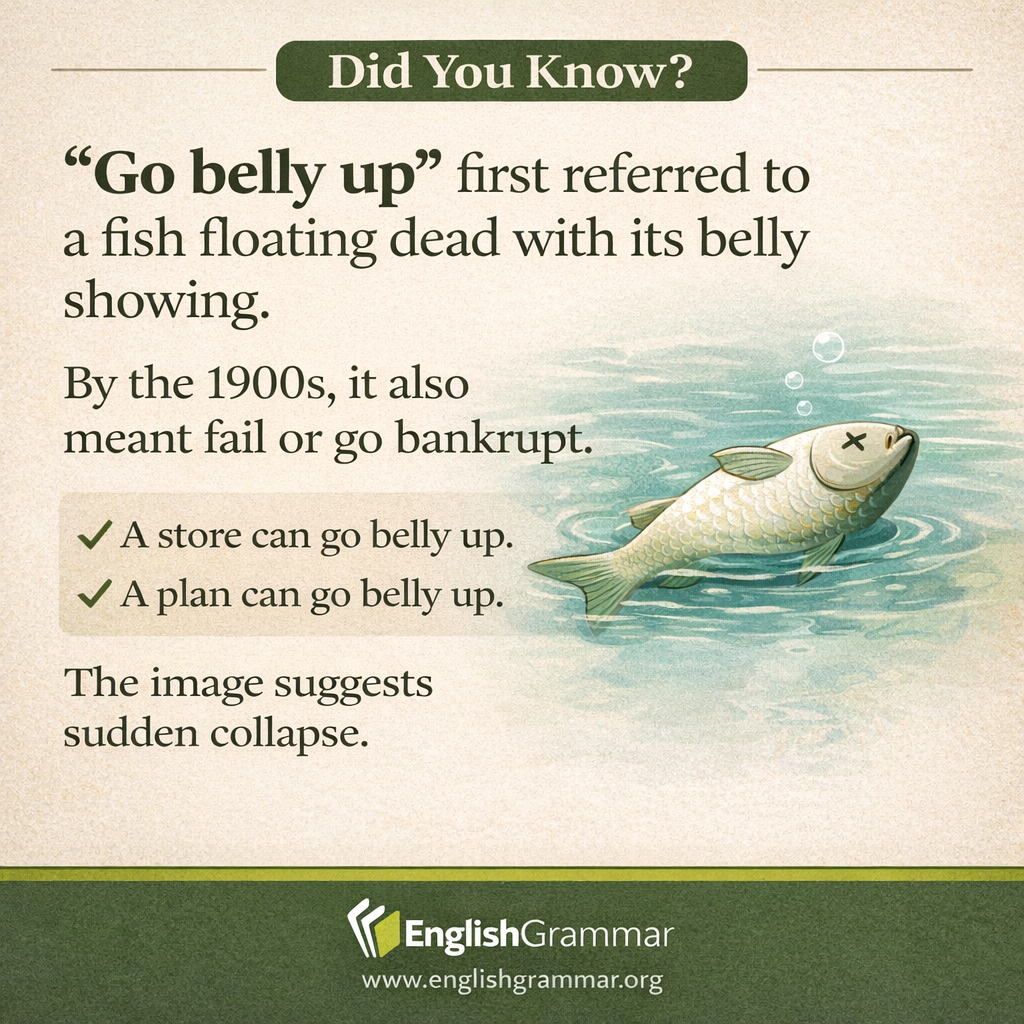
“Go belly up” likely began as a literal image: a dead fish floating in the water with its pale belly facing upward. That visual made the phrase easy to understand, and over time it developed a figurative meaning.
By the early 1900s, English speakers were using go belly up to mean fail, collapse, or go bankrupt. The phrase often suggests a sudden or complete end, not just a small problem.
- A business can go belly up: The restaurant went belly up after a year.
- A plan can go belly up: Our travel plans went belly up when the flight was canceled.
This is why the phrase feels so vivid. It does not just mean “stop working.” It points to a total breakdown, using the memorable picture of a fish floating upside down. In modern use, people most often apply it to companies, deals, projects, or plans that fail badly or end unexpectedly.
