
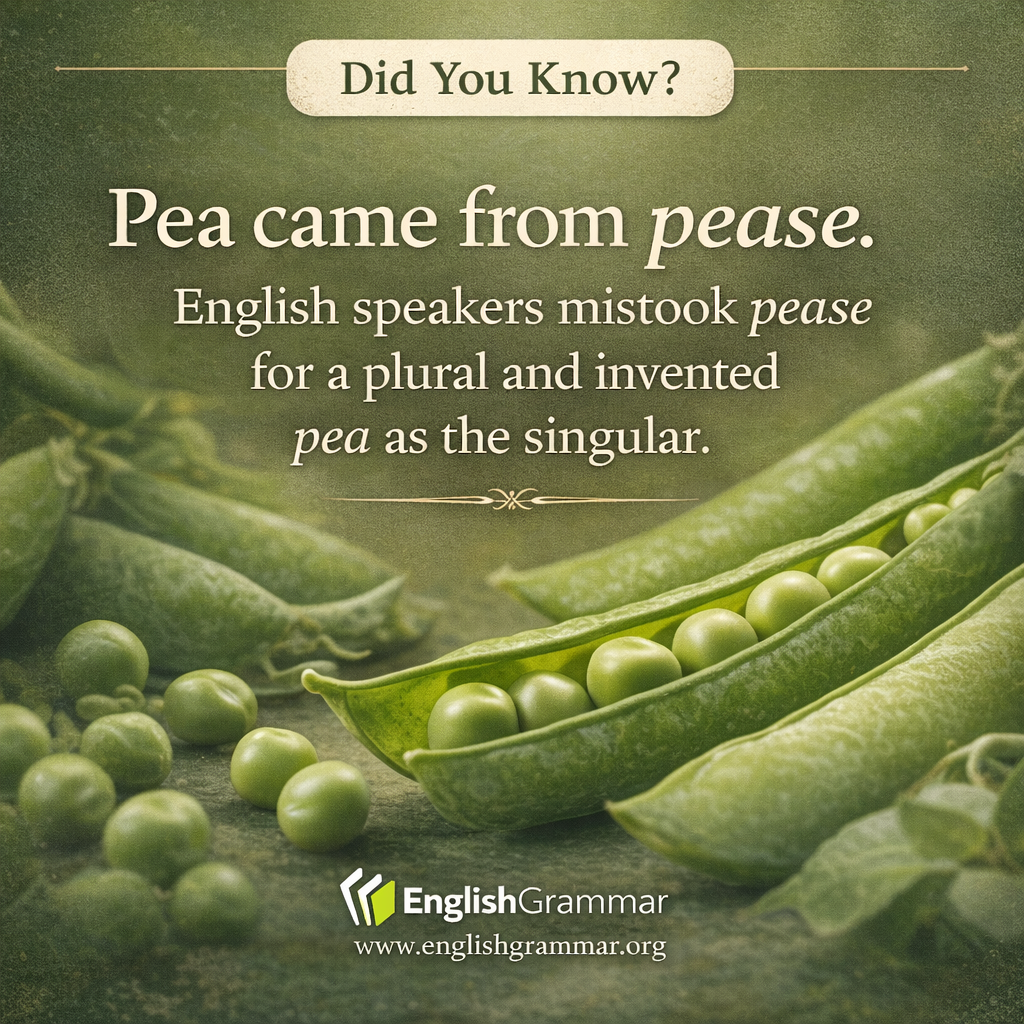
Pea feels like the obvious singular of peas, but historically it was created by mistake. The older English word was pease, a mass noun, much like rice or oatmeal. People could talk about some pease, not just one pea.
Over time, speakers began to hear the final s in pease as a plural ending. Once that happened, English naturally formed a new singular by removing the s, giving us pea. Linguists call this process back formation, when a new word is made by taking away what seems to be an ending.
A simple contrast shows the change:
- Older usage: I ate some pease.
- Later usage: I ate a pea. and I ate some peas.
This kind of change is common in language. Speakers look for familiar patterns, and sometimes they reshape older words to fit them. So pea is standard modern English, but it exists because people reanalyzed pease as if it were already plural.
