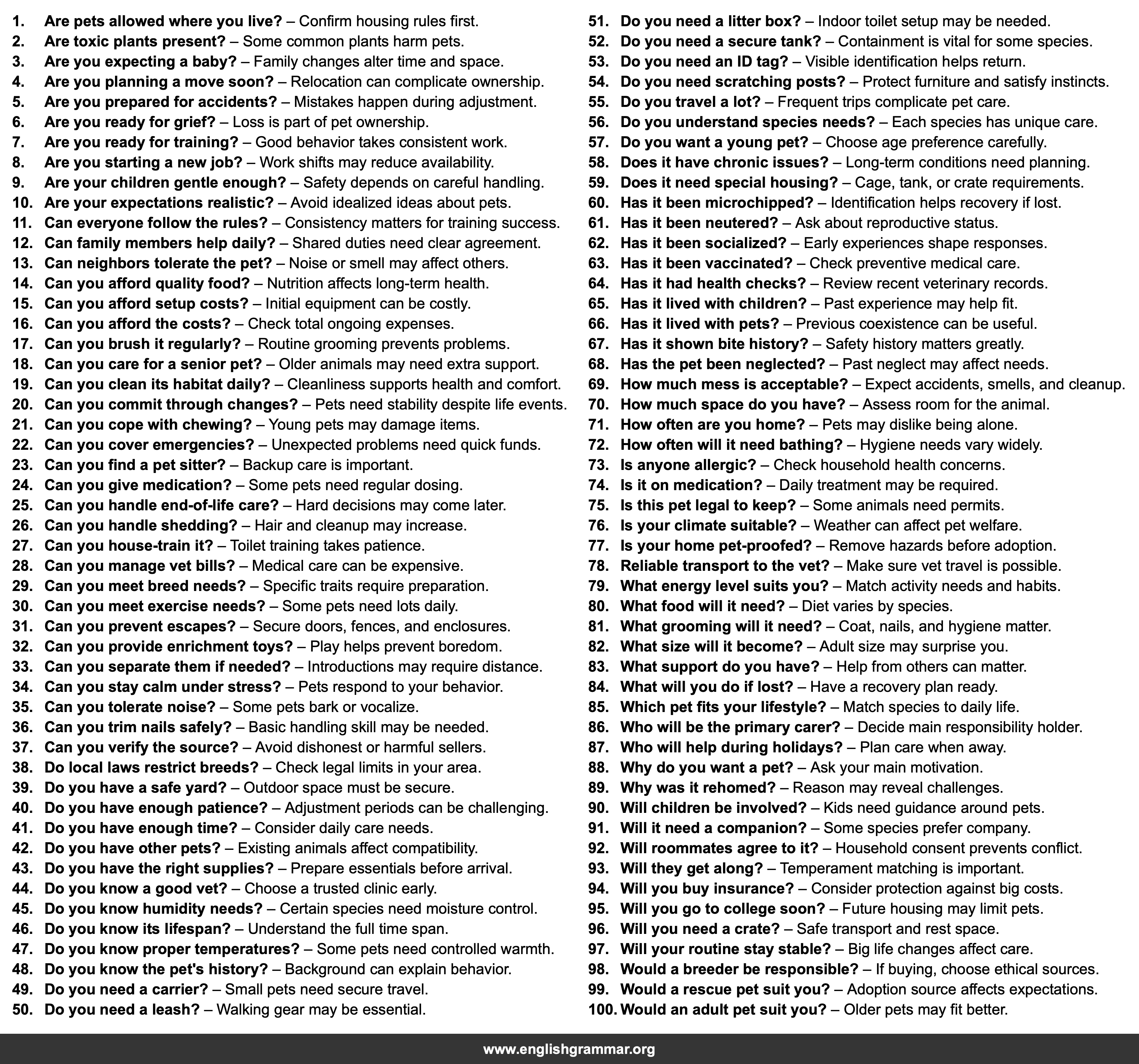
| No. | Item | Definition |
|---|---|---|
| 1. | Are pets allowed where you live? | Confirm housing rules first. |
| 2. | Are toxic plants present? | Some common plants harm pets. |
| 3. | Are you expecting a baby? | Family changes alter time and space. |
| 4. | Are you planning a move soon? | Relocation can complicate ownership. |
| 5. | Are you prepared for accidents? | Mistakes happen during adjustment. |
| 6. | Are you ready for grief? | Loss is part of pet ownership. |
| 7. | Are you ready for training? | Good behavior takes consistent work. |
| 8. | Are you starting a new job? | Work shifts may reduce availability. |
| 9. | Are your children gentle enough? | Safety depends on careful handling. |
| 10. | Are your expectations realistic? | Avoid idealized ideas about pets. |
| 11. | Can everyone follow the rules? | Consistency matters for training success. |
| 12. | Can family members help daily? | Shared duties need clear agreement. |
| 13. | Can neighbors tolerate the pet? | Noise or smell may affect others. |
| 14. | Can you afford quality food? | Nutrition affects long-term health. |
| 15. | Can you afford setup costs? | Initial equipment can be costly. |
| 16. | Can you afford the costs? | Check total ongoing expenses. |
| 17. | Can you brush it regularly? | Routine grooming prevents problems. |
| 18. | Can you care for a senior pet? | Older animals may need extra support. |
| 19. | Can you clean its habitat daily? | Cleanliness supports health and comfort. |
| 20. | Can you commit through changes? | Pets need stability despite life events. |
| 21. | Can you cope with chewing? | Young pets may damage items. |
| 22. | Can you cover emergencies? | Unexpected problems need quick funds. |
| 23. | Can you find a pet sitter? | Backup care is important. |
| 24. | Can you give medication? | Some pets need regular dosing. |
| 25. | Can you handle end-of-life care? | Hard decisions may come later. |
| 26. | Can you handle shedding? | Hair and cleanup may increase. |
| 27. | Can you house-train it? | Toilet training takes patience. |
| 28. | Can you manage vet bills? | Medical care can be expensive. |
| 29. | Can you meet breed needs? | Specific traits require preparation. |
| 30. | Can you meet exercise needs? | Some pets need lots daily. |
| 31. | Can you prevent escapes? | Secure doors, fences, and enclosures. |
| 32. | Can you provide enrichment toys? | Play helps prevent boredom. |
| 33. | Can you separate them if needed? | Introductions may require distance. |
| 34. | Can you stay calm under stress? | Pets respond to your behavior. |
| 35. | Can you tolerate noise? | Some pets bark or vocalize. |
| 36. | Can you trim nails safely? | Basic handling skill may be needed. |
| 37. | Can you verify the source? | Avoid dishonest or harmful sellers. |
| 38. | Do local laws restrict breeds? | Check legal limits in your area. |
| 39. | Do you have a safe yard? | Outdoor space must be secure. |
| 40. | Do you have enough patience? | Adjustment periods can be challenging. |
| 41. | Do you have enough time? | Consider daily care needs. |
| 42. | Do you have other pets? | Existing animals affect compatibility. |
| 43. | Do you have the right supplies? | Prepare essentials before arrival. |
| 44. | Do you know a good vet? | Choose a trusted clinic early. |
| 45. | Do you know humidity needs? | Certain species need moisture control. |
| 46. | Do you know its lifespan? | Understand the full time span. |
| 47. | Do you know proper temperatures? | Some pets need controlled warmth. |
| 48. | Do you know the pet’s history? | Background can explain behavior. |
| 49. | Do you need a carrier? | Small pets need secure travel. |
| 50. | Do you need a leash? | Walking gear may be essential. |
| 51. | Do you need a litter box? | Indoor toilet setup may be needed. |
| 52. | Do you need a secure tank? | Containment is vital for some species. |
| 53. | Do you need an ID tag? | Visible identification helps return. |
| 54. | Do you need scratching posts? | Protect furniture and satisfy instincts. |
| 55. | Do you travel a lot? | Frequent trips complicate pet care. |
| 56. | Do you understand species needs? | Each species has unique care. |
| 57. | Do you want a young pet? | Choose age preference carefully. |
| 58. | Does it have chronic issues? | Long-term conditions need planning. |
| 59. | Does it need special housing? | Cage, tank, or crate requirements. |
| 60. | Has it been microchipped? | Identification helps recovery if lost. |
| 61. | Has it been neutered? | Ask about reproductive status. |
| 62. | Has it been socialized? | Early experiences shape responses. |
| 63. | Has it been vaccinated? | Check preventive medical care. |
| 64. | Has it had health checks? | Review recent veterinary records. |
| 65. | Has it lived with children? | Past experience may help fit. |
| 66. | Has it lived with pets? | Previous coexistence can be useful. |
| 67. | Has it shown bite history? | Safety history matters greatly. |
| 68. | Has the pet been neglected? | Past neglect may affect needs. |
| 69. | How much mess is acceptable? | Expect accidents, smells, and cleanup. |
| 70. | How much space do you have? | Assess room for the animal. |
| 71. | How often are you home? | Pets may dislike being alone. |
| 72. | How often will it need bathing? | Hygiene needs vary widely. |
| 73. | Is anyone allergic? | Check household health concerns. |
| 74. | Is it on medication? | Daily treatment may be required. |
| 75. | Is this pet legal to keep? | Some animals need permits. |
| 76. | Is your climate suitable? | Weather can affect pet welfare. |
| 77. | Is your home pet-proofed? | Remove hazards before adoption. |
| 78. | Reliable transport to the vet? | Make sure vet travel is possible. |
| 79. | What energy level suits you? | Match activity needs and habits. |
| 80. | What food will it need? | Diet varies by species. |
| 81. | What grooming will it need? | Coat, nails, and hygiene matter. |
| 82. | What size will it become? | Adult size may surprise you. |
| 83. | What support do you have? | Help from others can matter. |
| 84. | What will you do if lost? | Have a recovery plan ready. |
| 85. | Which pet fits your lifestyle? | Match species to daily life. |
| 86. | Who will be the primary carer? | Decide main responsibility holder. |
| 87. | Who will help during holidays? | Plan care when away. |
| 88. | Why do you want a pet? | Ask your main motivation. |
| 89. | Why was it rehomed? | Reason may reveal challenges. |
| 90. | Will children be involved? | Kids need guidance around pets. |
| 91. | Will it need a companion? | Some species prefer company. |
| 92. | Will roommates agree to it? | Household consent prevents conflict. |
| 93. | Will they get along? | Temperament matching is important. |
| 94. | Will you buy insurance? | Consider protection against big costs. |
| 95. | Will you go to college soon? | Future housing may limit pets. |
| 96. | Will you need a crate? | Safe transport and rest space. |
| 97. | Will your routine stay stable? | Big life changes affect care. |
| 98. | Would a breeder be responsible? | If buying, choose ethical sources. |
| 99. | Would a rescue pet suit you? | Adoption source affects expectations. |
| 100. | Would an adult pet suit you? | Older pets may fit better. |
