
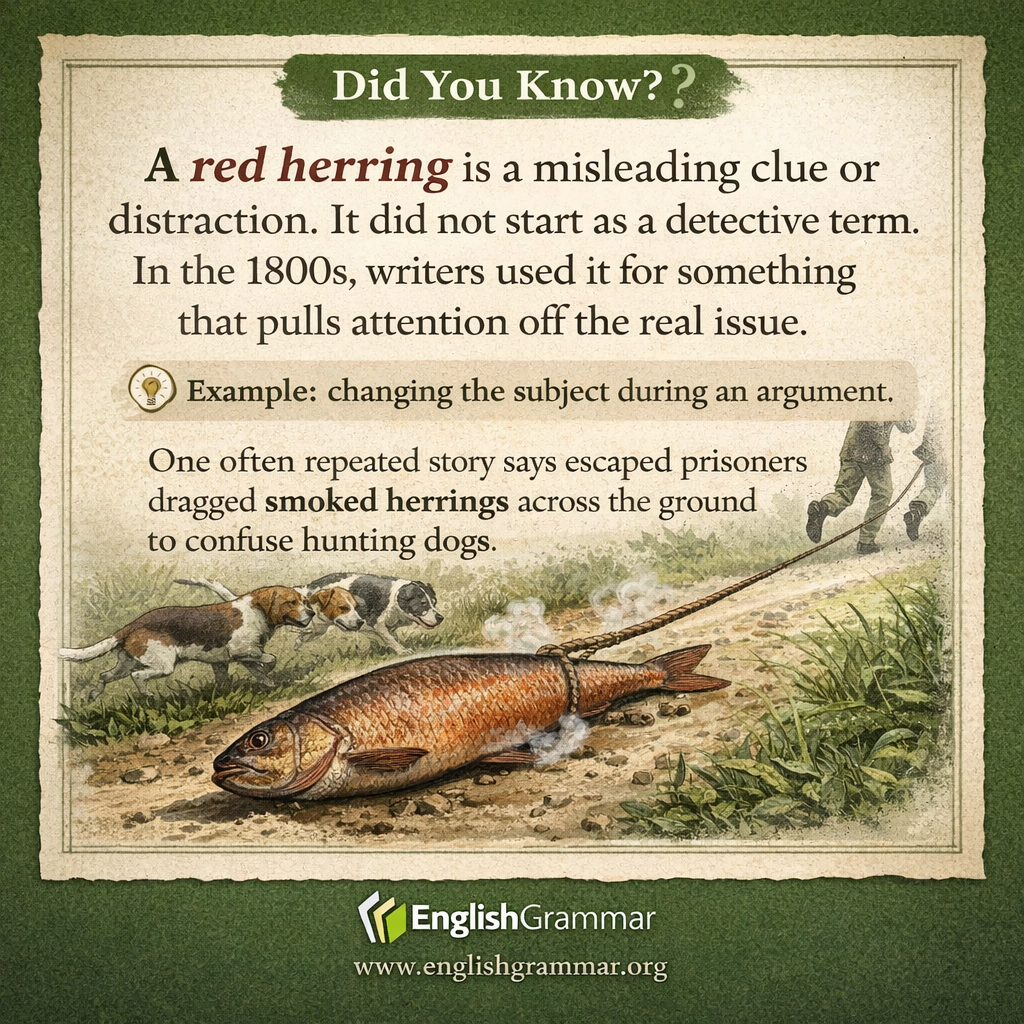
A red herring is something that distracts people from the real point. Today, many people meet it in mysteries, where a clue seems important but turns out to be misleading. But the phrase did not begin as a detective term.
Originally, a red herring was a real fish, a herring that had been heavily cured and smoked until it became reddish and strongly smelling. In the early 1800s, writers began using the phrase figuratively for something that draws attention away from the main issue.
One often repeated story says escaped prisoners dragged smoked herrings across the ground to confuse hunting dogs. That tale is widely doubted. A better supported source is the journalist William Cobbett, who used red herring in 1807 while criticizing misleading political reporting.
Here is the modern sense:
- In an argument: bringing up a side issue instead of answering the main question.
- In a mystery: a suspicious clue that leads readers in the wrong direction.
Example: if someone is asked about missing money and starts talking about office snacks, that new topic is a red herring.
