
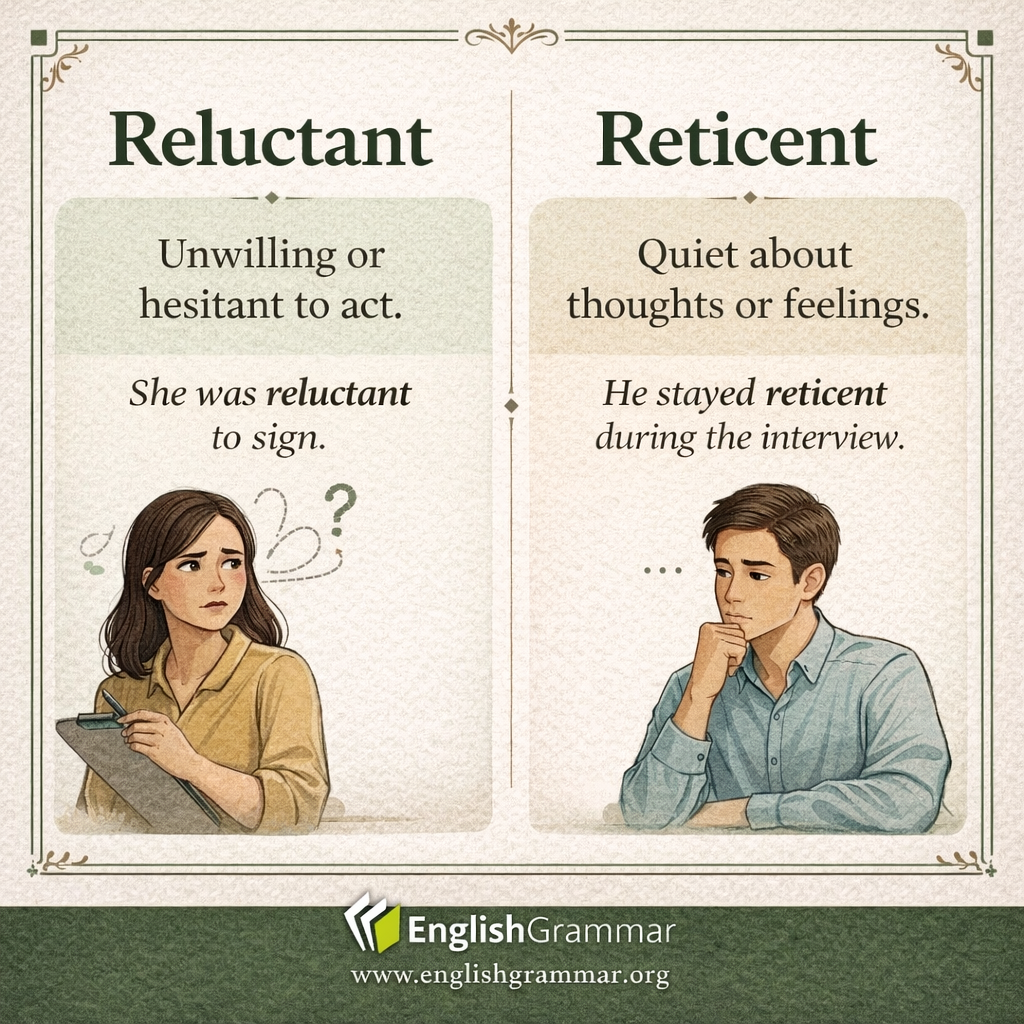
Reluctant and reticent are easy to confuse because both can suggest hesitation. But they describe different kinds of hesitation.
Reluctant means unwilling or hesitant to do something. It is about action or decision. If someone does not want to agree, go, sign, speak, or join in, this word fits.
Example: She was reluctant to sign the contract.
Reticent means quiet, reserved, or not revealing much. It is about communication, not willingness in general. A reticent person may answer briefly, avoid sharing feelings, or stay silent in discussion.
Example: He stayed reticent during the interview.
A simple way to remember the contrast is this:
- Reluctant: hesitant to do something
- Reticent: hesitant to say much
Sometimes a person can be both. Someone might be reluctant to join the meeting and reticent once it begins. But the words are not interchangeable. Use reluctant for unwilling action, and use reticent for reserved speech.