
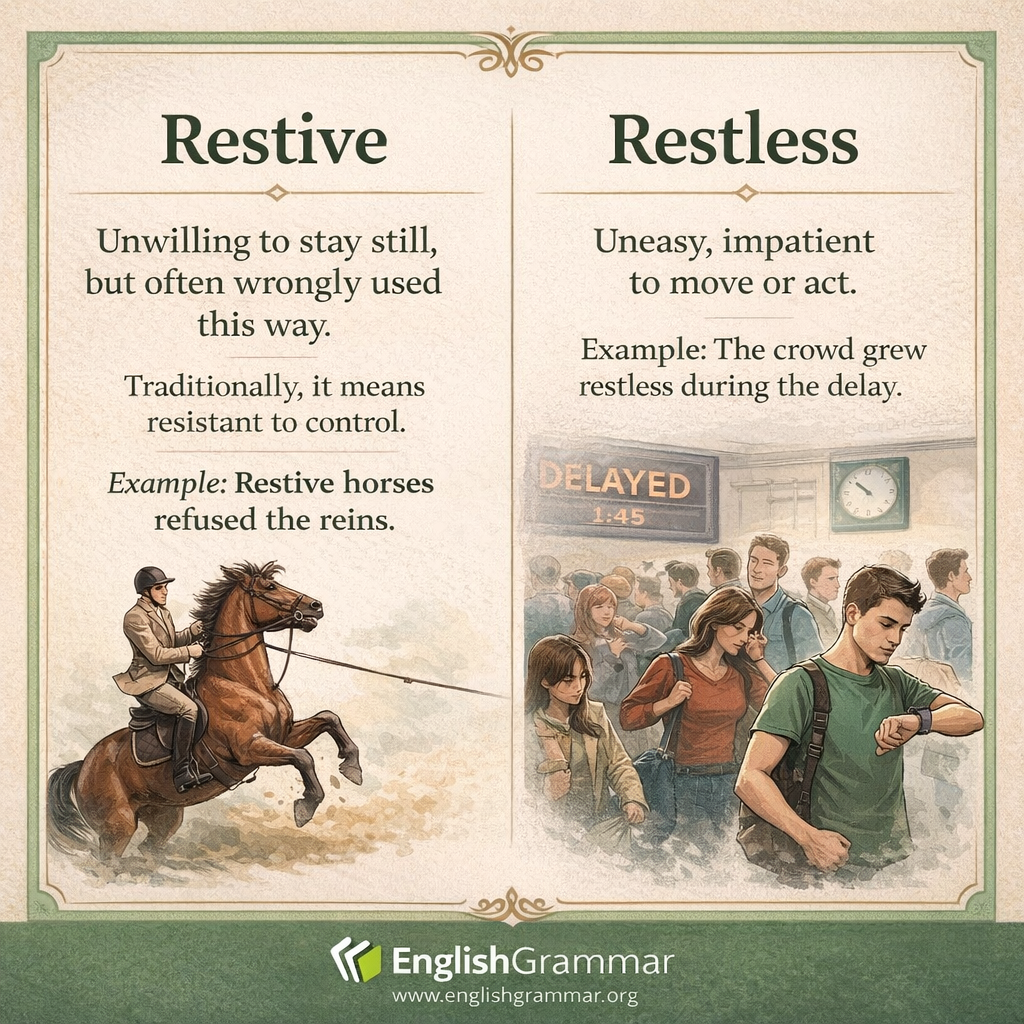
Restless is the common word for feeling uneasy, impatient, or unable to stay still. Use it for people, crowds, or even nights when there is too much motion or agitation.
Example: The audience grew restless during the long delay.
Restive is different. In traditional usage, it means resistant to control, stubborn, or hard to manage. It often appears with animals, groups, or people pushing back against restraint.
Example: The restive horses pulled against the reins.
The confusion happens because many modern writers use restive as if it meant restless. That use is common, but careful writers often keep the older distinction clear.
- Use restless for fidgety, uneasy, impatient movement.
- Use restive for resistance, opposition, or refusal to submit.
If you mean that someone cannot sit still, choose restless. If you mean that someone or something resists control, choose restive.