
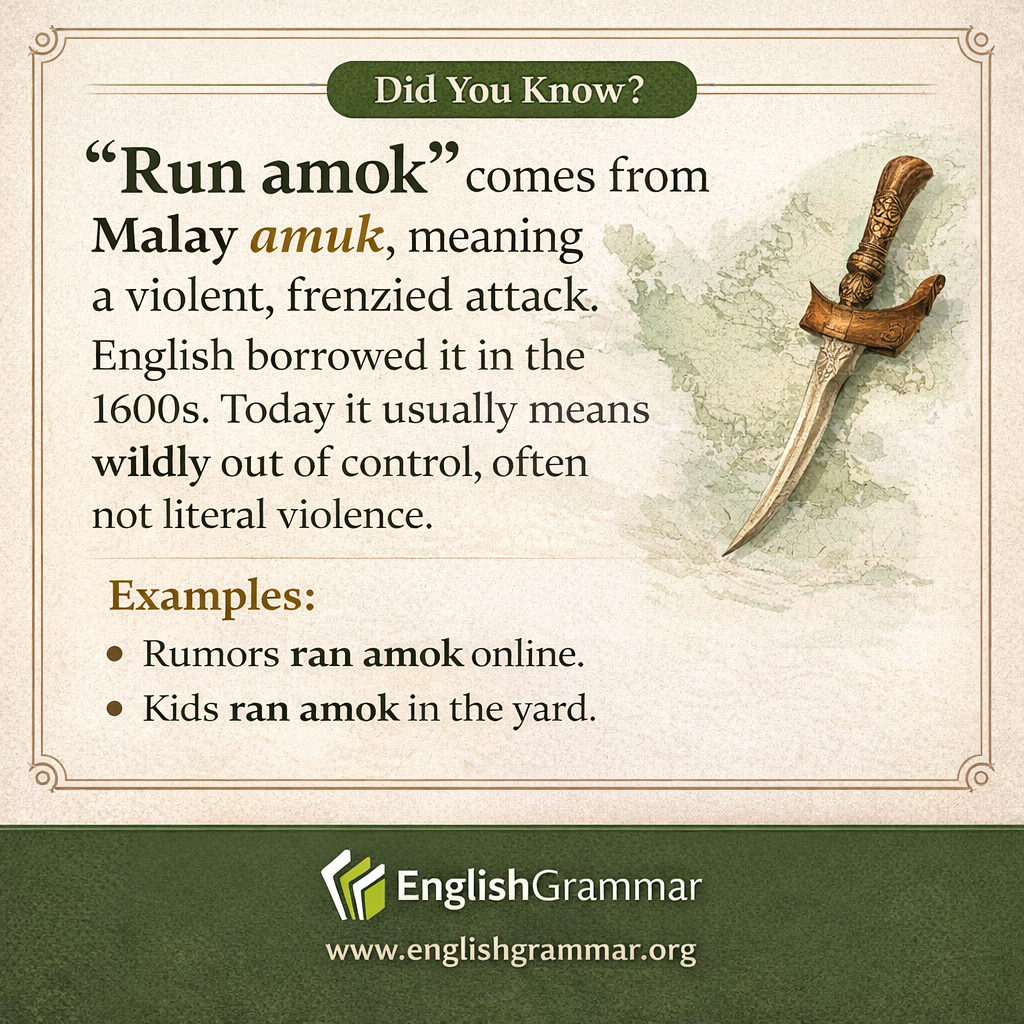
Run amok comes from the Malay word amuk, which referred to a violent, frenzied attack. English speakers borrowed the expression in the 1600s, and for a long time it kept that strong sense of uncontrolled violence.
Over time, the phrase broadened. In modern English, people often use run amok more figuratively to mean behaving in a chaotic, uncontrolled, or excessive way. It still suggests a loss of control, but not always literal violence.
- Older sense: a person attacks in a frenzy.
- Common modern sense: something spreads or behaves wildly out of control.
- Example: “Rumors ran amok after the announcement.”
- Example: “The children ran amok in the garden.”
Because of that history, the phrase can sound stronger than simple words like misbehaved or got messy. It is best used when you want to emphasize chaos, excess, or a complete loss of restraint.
