
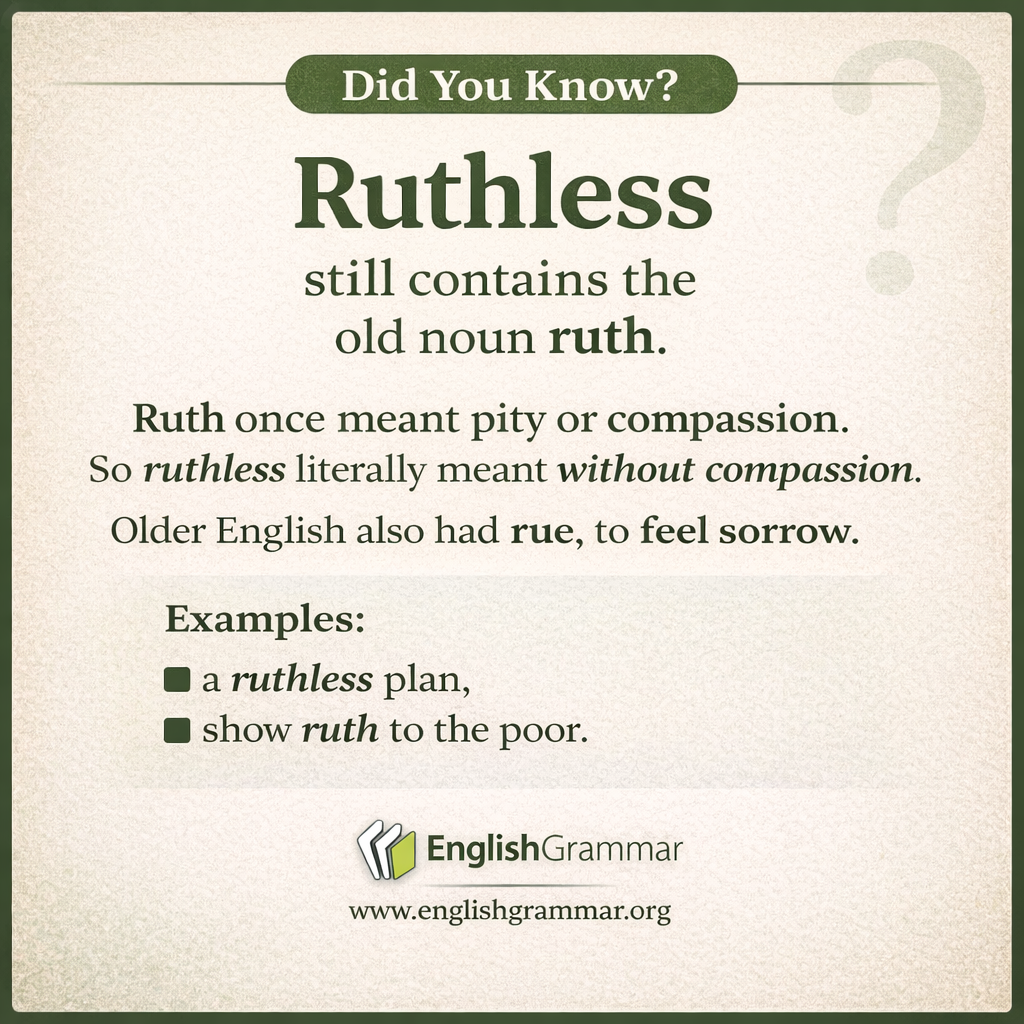
Ruthless still contains an older English word: ruth. In earlier English, ruth meant pity, compassion, or sorrow for someone else’s suffering. So ruthless originally meant without pity or without compassion.
Today, most people use ruthless without recognizing the older noun inside it. We might describe a person, decision, or strategy as ruthless when it seems cold, severe, or unwilling to show mercy.
- Original sense: He was ruthless, meaning he showed no compassion.
- Modern use: It was a ruthless business tactic.
The older noun ruth is now rare, but it has not disappeared completely in literary or historical contexts. It is also related to the older verb rue, which means to feel regret or sorrow. That connection helps show the emotional idea behind the word family.
So when you see ruthless, you are looking at a modern common word that still preserves an older one inside it.